

How to Obtain Swedish Citizenship in 2026: Requirements, Procedures, and Costs for Ukrainians
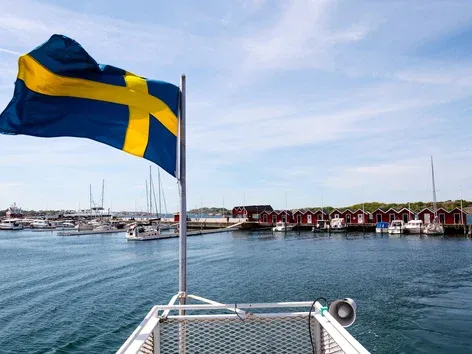
Sweden is one of Europe’s most developed countries and attracts thousands of Ukrainians with opportunities for work, education, and a comfortable life. A Swedish passport grants free movement within the EU and visa-free entry to 177 countries worldwide. Learn more about how to obtain Swedish citizenship, the requirements for applicants, the cost of the procedure, and the step-by-step application process in 2026

Sweden remains one of the most popular destinations for Ukrainian immigrants. The country is a member of the EU, offers a high level of social protection, and its passport grants visa-free access to 177 countries worldwide. In the summer of 2024 alone, Sweden accepted over 26,000 immigrants, and approximately half of them were Ukrainian citizens. The process of obtaining Swedish citizenship has several paths and depends on the basis for your stay in the country.
Who is eligible for a Swedish passport, what steps must be taken, how much does it cost, and what documents are required—we’ll cover all of this below.
Planning to move and want to avoid mistakes in the legalization process?
An immigration lawyer from the Visit World portal will help you determine the optimal basis for obtaining a residence permit, gather the necessary documents, and complete all stages leading to citizenship without unnecessary delays.

Benefits of Swedish Citizenship
A Swedish passport grants the full range of rights of a citizen of a European Union member state. This means the ability to live and work freely in any EU country, vote in parliamentary elections and run for the Riksdag, as well as hold positions in the civil service, including in the police and armed forces. In addition, Swedish citizens have priority access to free healthcare (the country ranks 17th in Europe on the Health Index) and education—both in Swedish and other European educational institutions.
According to the Quality of Life Index, Sweden ranks among the world’s best countries, providing residents with a high level of social security. It is worth noting that a significant portion of these rights (residence, employment, social protection) are available as early as the permanent residency stage. The main difference between a permanent resident and a citizen lies in the right to vote, access to certain government positions, and visa-free travel with a Swedish passport. There are practically no major drawbacks to obtaining citizenship—the only challenges may involve the financial costs of legalization and bureaucratic procedures.
Which countries topped the 2026 happiness ranking — read here.
Who is eligible for Swedish citizenship: basic requirements
Swedish law provides for several categories of individuals who may apply for citizenship: by birth, adoption, registration (notification), or naturalization. For most foreigners, including Ukrainians, the main route is naturalization after five years of residence in the country. A shortened period—three years—applies to individuals married to a Swedish citizen.
Regardless of the basis, a citizenship applicant must meet the following requirements: being at least 18 years of age, proving identity with a passport or other document, meeting the residency requirement (continuous residence for the specified period), having no outstanding debts to the state or private companies, and providing a certificate of no criminal record. Depending on the severity of the crime, a period of 1 to 10 years must have elapsed since the offense was committed. Children under 18 may be included in one parent’s application without an additional fee, but with proof of family ties and, if necessary, the consent of the other parent. The Swedish Migration Agency makes the decision on granting citizenship.
Visit World services for tourists, migrants, and expats: Insurance | Guides | Legal advice
Citizenship by Birth, Adoption, and Restoration of Status
A child automatically acquires Swedish citizenship if at least one parent is a Swedish citizen or held that status at the time of death. A child under the age of 12 who is adopted by a Swedish citizen also receives citizenship automatically. A special case applies to an infant found within the country: the child is considered a Swedish citizen until other information is established.
Another mechanism is registration by notification. This is available to individuals aged 18 to 21 who have resided in Sweden since the age of 13 and hold a temporary residence permit, resident status, or a residence card. For refugees, persons with subsidiary protection, and stateless children from birth, a residency requirement applies: 5 years of continuous residence or 10 years of total residence in the country. Children under 18 who were born abroad before April 1, 2015, and whose father is Swedish are also eligible for registration (provided the parents are married, this status is granted automatically).
Former Swedish citizens who lost their status before July 1, 2001 (before dual citizenship was permitted) are eligible to reinstate it. This applies to those who lost their passport due to obtaining a foreign document, entering public service abroad, or acquiring foreign citizenship as a child along with one of their parents. An application for reinstatement is submitted to the Migration Agency with a fee of 42 EUR; after approval, a passport is issued through a police station.
About the easiest countries to move to in 2026 — read more at the link.
Naturalization in Sweden: grounds for obtaining a residence permit
For most Ukrainians, the path to Swedish citizenship begins with obtaining a temporary residence permit (TRP) even before moving. The grounds may include employment, self-employment, education, family reunification, or asylum. Each of these categories has its own requirements, processing times, and costs, but the general process is the same: TRP → renewal → permanent residence permit (PRP) → citizenship.
– Employment. A Swedish employer submits an application for a work permit online based on an employment contract. The fee ranges from 131 to 192 EUR depending on the profession. The permit is valid for two years and can be extended. After 48 months with a work permit, you can apply for a permanent residence permit (PRP), and after 5 years of total residence, you can apply for citizenship. Along with the work permit application, you can submit documents for family reunification (translated into English or Swedish and apostilled).
– Self-employment and business. A residence permit for entrepreneurs is applied for online. The applicant must confirm sufficient funds in their account: at least 17,511 EUR for themselves, 8,758 EUR for a partner, and 4,379 EUR for each child. Proof of company management and proficiency in English or Swedish is also required. The permit is issued for two years, after which you can obtain a permanent residence permit (PRP). After crossing the Swedish border, you must contact the Migration Agency to submit biometric data and apply for a card.
– Education. A residence permit for students is issued for up to two years, provided that enrollment in a university, payment of tuition, and financial capacity are confirmed. After completing studies, you can obtain a temporary residence permit (TRP) to look for work for up to one year (provided you have at least 905 EUR per month and an insurance policy). Next comes applying for a work permit and proceeding toward a permanent residence permit (PRP) and citizenship.
– Job search for highly qualified professionals. A separate type of permit—valid for 3–9 months—is available for individuals with a master’s or doctoral degree. Requirements: proof of 1,138 EUR per month for living expenses and an insurance policy. Applications must be submitted exclusively from abroad, without the right to bring family members. After employment or starting a business, the basis changes to the corresponding category.
– Family reunification. Family members (partners, children, parents of minors) of a Swedish citizen or a permanent residence permit holder aged 21 or older may obtain a temporary residence permit. Proof of family ties, housing, and financial capacity is required: 535 EUR per adult, starting at 285 EUR per child (after living expenses). After submitting the application, an interview at the embassy is mandatory. The Temporary Residence Permit is valid for up to two years, renewable for another two years, and after four years, you may apply for a Permanent Residence Permit.
– Asylum. The application is submitted to the Migration Agency along with proof of identity, biometric data, and an interview. If approved, a residence permit valid for three years is issued. To renew, an online application must be submitted along with proof of the ability to support oneself and one’s family. The renewed document is valid for 2 to 3 years. After 5 years of residence, the right to apply for citizenship is granted.
How Europe’s Golden Visas work in 2026 — we covered this in a previous article.
Step-by-step guide to obtaining Swedish citizenship
The entire process, from relocation to receiving a passport, takes at least five years and involves several distinct stages. Ukrainians do not need a visa to enter Sweden; however, for long-term stays, a residence permit must be obtained before departure.
Step 1. Applying for a Temporary Residence Permit (TRP). The application is submitted online via the Migration Agency’s electronic service, along with proof of eligibility (employment contract, university admission, etc.), sufficient funds for living expenses, and a valid insurance policy. The Temporary Residence Permit is issued for 1–2 years and is renewable.
Step 2. Registration with the Tax Agency. Upon arrival in Sweden, you must register with the Tax Agency (Skatteverket) to obtain a tax identification number. You will need your TRP, passport, and residential address for this. The process takes approximately 4 weeks. Using your identification number, you can apply for an ID card (valid for 5 years) by making an appointment at a service center.
Step 3. Obtaining a Permanent Residence Permit (PRP). After three years of residence in Sweden with a Temporary Residence Permit (TRP), you can apply online for permanent residence, provided you have sufficient financial means and lead a law-abiding life. The PRP is valid for 3 to 5 years and remains in effect as long as the person resides in the country. It may be revoked in the event of a serious crime or if you move abroad.
Step 4. Long-term resident status (optional). After 5 years of residence (with breaks of no more than 10 months), you can apply for long-term resident status (Form 138011) by paying the fee. Proof of identity and financial means is required. Upon approval, you will be scheduled for biometric data collection and will receive the card by mail. This status also automatically grants a residence permit if one has not been issued previously.
Step 5. Applying for citizenship. The application is submitted online via the Migration Agency’s electronic service or by mail with a fee of 132 EUR. You can track the status of your application via “My Page.” The completeness of your application directly affects processing time—if additional documents are required, the processing time will be extended.
Step 6. Receiving the passport. After a positive decision, you must schedule an appointment at a police station online, present identification, and pay the fee (44 EUR for a passport, 35 EUR for an ID card). The finished document is delivered within 6 business days and can be picked up at the passport office. Children under 18 are included in their parents’ application at no additional cost, but children aged 12 and older must provide an electronic signature consenting to the acquisition of citizenship.
Where in Europe is it hardest to obtain citizenship in 2026?— read here.
How much does it cost to obtain Swedish citizenship in 2026?
The costs of legalization fall into several categories and depend on the basis for residence. The main expenses on the path to citizenship through naturalization include: work permit — 193 EUR (renewal — 193 EUR), obtaining a residence permit — from 132 to 175 EUR, application for long-term resident status — from 44 to 131 EUR, residence permit for family reunification — 176 EUR (88 EUR per child), citizenship application — 132 EUR, passport — 44 EUR, ID card — 35 EUR.
To these amounts, one must add the costs of apostilling documents, obtaining necessary certificates, translations, and insurance. The largest expense in the naturalization process remains living abroad for at least five years—rent, food, and daily necessities. Citizenship itself cannot be “bought”—it can only be obtained through legal means by completing all required procedures.
Remember! The process of obtaining Swedish citizenship involves numerous bureaucratic steps, from choosing the basis for relocation to gathering documents and submitting the final application. Mistakes at any stage can lead to delays or rejection. The Visit World portal offers the services of a qualified immigration lawyer who will help you choose the optimal path to legalization, prepare documents in accordance with the requirements of the Swedish Migration Agency, and guide you through the process every step of the way.
Book a consultation with an immigration lawyer on the Visit World portal and make your path to Swedish citizenship clear and predictable!
Reminder! Sweden continues to reform its immigration policy, creating more favorable conditions for foreign workers. Starting in the summer of 2026, the country will significantly extend the validity periods of key work permits. Read more about the new validity periods for the EU Blue Card and seasonal work permits in Sweden by following the link.
Photo: Freepik
Products from Visit World for a comfortable trip:
Checklist for obtaining a visa and necessary documents in the Sweden;
Legal advice on immigration to the Sweden;
Travel insurance for foreigners in the Sweden;
Medical insurance all over the world.
We monitor the accuracy and relevance of our information, so if you notice any errors or inconsistencies, please contact our hotline.
Frequantly
asked questions
How long do you need to live in Sweden to obtain citizenship?
Is a language test required for Swedish citizenship?
Recommended articles
3 min
Expats
Sweden continues to reform its immigration policy, creating more favorable conditions for foreign workers. Starting in the summer of 2026, the country will significantly extend the validity periods of key work permits. Learn more about the new validity periods for the EU Blue Card and seasonal work permits in Sweden
30 Mar. 2026
More details3 min
Expats
Malta or Cyprus Golden Visa in 2026: A Comparison of Investor Programs
Malta and Cyprus offer investors “golden visas” granting permanent residency in the EU, but the terms of the programs differ significantly—from cost and processing times to access to the Schengen Area and the path to citizenship. The choice depends on your priorities: mobility within Europe, investment flexibility, or tax optimization. Learn more about the comparison of Malta and Cyprus “golden visas” in 2026
01 Apr. 2026
More details1 min
Expats
Living on €500: Best Countries for Digital Nomads in 2026
Affordable living abroad is becoming a reality for remote workers. Find out which countries you can live comfortably on 500 euros and how to prepare for a move
02 Apr. 2026
More details3 min
Expats
Immigration to New Zealand in 2026: Visas, Employment, Costs, and the Path to Citizenship
Moving to New Zealand in 2026 is a strategy that relies on choosing the right type of visa and understanding the actual costs and chances of obtaining residency. The immigration system is becoming more demanding, but at the same time, it offers clear opportunities for professionals, investors, and families. Learn more about the requirements, costs, and best ways to move
05 Apr. 2026
More detailsAll materials and articles are owned by VisitWorld.Today and are protected by international intellectual property regulations. When using materials, approval from VisitWorld.Today is required.