

Visa Requirements by Country 2026: Complete Global Guide for Travelers

Visa rules are changing and becoming more digital in 2026, find out what types of visas exist, what requirements apply in different countries and how to prepare for your trip

Travel in 2026 is becoming increasingly digital, but also more complicated in terms of visa regulations. Each country has its own entry requirements, and even visa-free destinations are gradually introducing electronic prior authorization.
One of the most common questions travelers ask is: do I need visa for a specific country, and the answer increasingly depends on both your citizenship and destination. This travel visa guide explains the key principles and trends.
To avoid problems at the border, it is important to understand how the modern visa system works in the world. A detailed guide to visa requirements 2026 in this article.
Medical insurance is a basic element of safe travel in 2026. It allows you to get the necessary medical care abroad without significant financial costs and covers unforeseen situations. It is especially important to have a policy during long trips or trips to countries with expensive medicine. Having insurance is also often a mandatory requirement for obtaining a visa.
Get medical insurance in advance and travel with confidence.

How do visas work around the world in 2026?
One of the most common questions travelers ask is: do I need visa for a specific country, and the answer increasingly depends on both your citizenship and destination. This travel visa guide explains the key principles and trends.
A visa is an official permission to enter, stay or transit through the territory of another state. In the modern world, the visa system is based on three key principles: security (checking travelers before arrival), migration control, and facilitation of tourism and business travel.
In 2026, most countries will switch from paper visas to digital formats. For example, the European Union has introduced a new border control system (EES), which records the entry and exit of foreigners in digital format. This means that classic stamps in the passport are gradually disappearing.
In addition, countries are actively implementing advance authorization systems (ETA), which are actually becoming an intermediate form between visa-free travel and a full-fledged visa.
Top countries with the highest approval rates for Schengen visa applications, tips for applying and how to increase your chances of getting a visa in 2026 here.
Main visa categories in 2026
In 2026, the visa permit system has become more structured and technological. Although the names of the categories remain familiar, their content is gradually changing due to digitalization, biometrics and automated checks. Understanding each type allows you to correctly assess the requirements for the trip and avoid risks at the border.
Visa-free
Visa-free means the ability to enter the country without prior visa application through a consulate or online system. This is the most convenient format for short-term travel, tourism or business trips. Typically, visa-free means:
- limited period of stay (usually 30, 60 or 90 days);
- a ban on employment;
- the need to confirm the purpose of the trip (housing reservation, return ticket).
It is important to understand that in 2026, the classic “visa-free” is gradually transforming. Many countries retain the formal absence of a visa, but introduce a preliminary check of the traveler’s data. That is, in fact, visa-free travel becomes part of a controlled entry system.
Border services also have the right to refuse entry even without having to explain the reason if there are doubts about the purpose of the trip or financial capacity.
Electronic authorization (EES/eTA/ETIAS)
Electronic authorization is one of the main trends in international travel. Formally, it is not a visa, but performs a similar function of prior control.
The process looks like this:
- the traveler fills out an online questionnaire;
- the system automatically checks the data (security, migration history);
- in most cases, the decision is made within a few minutes or hours.
Features:
- binding to the passport (without physical documents);
- multiple use during the validity period (1–3 years);
- low cost compared to classic visas.
In 2026, such systems are actively used or implemented in different regions of the world. They allow states to control the flow of travelers before they arrive, reducing the burden on borders.
However, even an approved authorization does not guarantee entry - the final decision remains with the border guard.
Visa on Arrival
This type of visa is issued immediately upon arrival in the country - at the airport, seaport or land border crossing.
The procedure usually includes:
- filling out a short questionnaire;
- paying the visa fee;
- checking documents by the border guard.
Advantages - no need to apply in advance and a quick process in many countries.
Disadvantages - possible queues at the border, limited stay period, sometimes requirements for cash payment or a specific currency.
In 2026, this format is gradually losing popularity, as many countries switch to electronic visas. However, it remains relevant for tourist destinations where spontaneity of travel is important.
Electronic visa (eVisa)
eVisa is a full-fledged visa that is issued online without visiting a consulate. It combines the convenience of digital solutions and the formal status of a traditional visa.
What does the process include:
- Submitting an application form through the official website;
- Uploading documents (passport, photo, confirmation of travel);
- Paying the fee online;
- Receiving a permit by email.
Advantages:
- Saving time;
- Ability to apply from any country;
- Transparent review process.
Review times can vary from several hours to several days. In some cases, eVisa allows for both single and multiple entry.
This format is actively developing in the countries of Asia, the Middle East and Africa, where it has become the main way to obtain tourist visas.
About the procedure for obtaining an electronic visa to Venezuela, its cost, validity period and key requirements for applicants here.
Classic (consular) visa
A classic visa remains the most complex, but also the most universal form of entry permit. It is issued through embassies or visa centers and is often required for long-term or complex trips.
Typically, the process includes:
- collection of a full package of documents;
- confirmation of financial capacity;
- booking accommodation and tickets;
- sometimes a personal interview;
- submission of biometric data.
Typically, this type of visa is used for study, work, immigration, long-term stay.
The link tells you who can obtain a Schengen visa for more than 5 years and what conditions must be met for this.
In 2026, even classic visas will gradually transition to a digital format (without physical stickers in the passport), but the verification process itself remains complex and thorough.
The modern visa system is a combination of different approaches: from complete visa-free travel to complex consular procedures. The main trend is the transition to digital control and prior verification of travelers. This means that even the simplest trips require more careful planning than before.
Visit World services for tourists, migrants, and expats: Insurance | Guides | Legal advice
Visa rules for popular destinations
In 2026, visa rules by country vary significantly depending not only on the destination, but also on the traveler's citizenship. What is visa-free for some may require a complex registration procedure for others. That is why global travel today is a combination of geopolitics, security and international agreements. Let's consider the key directions that shape the global visa system.
European Union (Schengen Area)
Europe remains one of the most visited regions, but at the same time it is actively changing its approach to border control.
For citizens of different countries, the situation looks like this:
- Member states of the European zone have a complete visa-free regime.
- Most developed countries use visa-free regime with additional electronic authorization (ETIAS from 2026).
- For citizens of many countries in Africa, Asia and the Middle East, a Schengen visa is mandatory.
Key features:
- The 90/180 day rule remains the basic one.
- The EES (Entry/Exit System) has been introduced, which records all entries and exits.
- Overstay controls have been strengthened.
In practical terms, this means that even visa-free travellers are subject to prior checks and leave a digital footprint in the system.
United States of America
The USA has one of the most differentiated visa systems in the world, which is highly dependent on citizenship.
Main scenarios:
- Citizens of Visa Waiver Program countries can travel via ESTA
- For other countries, a classic B1/B2 visa is required.
- Some countries have restrictions or an increased level of verification
Features of the system: mandatory interview for most applicants, in-depth verification of biographical and social data, the possibility of obtaining long-term multiple-entry visas (up to 10 years for certain countries).
An important nuance: even with a visa, the decision on entry is made directly at the border, and refusals occur quite often.
Canada
Canada uses a hybrid model that combines simplified entry for some countries and classic visas for others.
Main formats:
- eTA (electronic authorization) for visa-free countries
- Visitor visa for citizens who need a visa
In 2026, the system became more digital - most applications are submitted online, biometrics are actively used, and decisions are often made automatically.
For travelers with “strong” passports, the process takes a few minutes, while for others it can take weeks or even months.
United Kingdom
After Brexit, the country built its own independent visa policy, which in 2026 became even more digital.
Key changes:
- Transition to electronic visas (without physical stickers)
- Introduction of ETA for visa-free countries
- Strengthening control over short-term visits
The system depends on citizenship: some countries have simplified access via ETA, others go through the standard visa procedure.
A feature of Britain is high attention to the purpose of the trip and the financial stability of the applicant.
Asia
The Asian region is the most flexible and diverse in terms of visa policy.
Several models can be distinguished:
1. Tourist-oriented countries (Thailand, Indonesia, Vietnam)
- Visa-free or visa on arrival for many citizens;
- Active implementation of eVisa;
- Simplified requirements to stimulate tourism.
2. Technologically developed countries (Japan, South Korea, Singapore)
- Visa-free for most developed countries;
- Electronic authorization systems;
- High level of automation of checks.
3. Countries with limited access
- Complicated or closed visa procedures;
- Restrictions depending on political factors.
Asia in 2026 is a region where you can see the future of visa systems: fast online solutions, minimal paper procedures and maximum digitalization.
Middle East
Middle Eastern countries are actively transforming their visa policies, focusing on tourism and business.
The main trends are the mass introduction of eVisa, simplification of rules for short-term trips, as well as the development of “visa on arrival” systems.
At the same time, requirements can vary significantly depending on citizenship, and some countries maintain strict entry rules altogether. This region demonstrates a balance between openness and control.
Visa rules are not a universal system, but a complex network of conditions that depend on the combination of two factors: the country of destination and the citizenship of the traveler. The same route can require completely different actions for different people.
Find the rules of entry to any country in the world for citizens of any state on the Visit World portal.
Main changes in visa policy in 2026
In 2026, many countries are updating their entry rules: some are tightening controls, others are simplifying travel.
- Europe (Schengen): implementation of EES with biometrics at the border and preparation for ETIAS (end of 2026). Romania and Bulgaria are fully in Schengen.
- Uzbekistan: visa-free for up to 30 days for certain travelers.
- Brazil: return of electronic visa (eVisa) for some countries.
- Thailand: mandatory digital arrival card.
- United Kingdom: introduction of ETA before entry.
- Israel: ETA-IL system with prior online submission.
- China: up to 10 days of visa-free transit and visa-free regime.
- Bolivia: abolition of visas for certain categories of travelers.
Always check the current regulations before you travel, as they vary by country and nationality and are subject to change.
Tips for planning your trip in 2026
To avoid being denied entry or having problems at the border, here are a few rules to follow:
1. Check the requirements in advance
Even visa-free travel may require electronic registration.
2. Keep an eye on your passport validity
Many countries require a minimum of 3-6 months of remaining validity.
3. Plan your stay
Violating the 90/180 day rule can result in fines or a ban on entry.
4. Use official sources
Do not apply through dubious websites.
5. Store documents digitally
In 2026, this is already the norm.
The global visa system in 2026 is moving towards digitalization and automation. Visa-free travel is gradually transforming into a pre-authorization format, while classic visas remain for more complex cases. It is important for travelers to adapt to the new rules and plan trips in advance - this is the key to a comfortable and safe trip.
In modern travel conditions, health insurance has become not just a recommendation, but a necessity. Many countries in 2026 will require an insurance policy as part of visa requirements, especially for long-term trips, study or work.
The policy covers the costs of medical care, hospitalization, emergency evacuation and even compensation in case of trip cancellation. This is especially important for expats, students and digital nomads who are abroad for a long time. Given the high prices for medical services in many countries, insurance helps to avoid serious financial losses. In addition, it gives psychological comfort and confidence in any situation.
Take care of your safety - take out health insurance before your trip!
Reminder! The Gulf countries have postponed the launch of the GCC Grand Tours joint tourist visa until 2026. Read here about the reasons for the delay, the consequences for travelers and what to expect next.
Photo - generated by Gemini
Products from Visit World for a comfortable trip:
Travel guide for 200 countries;
Legal advice from a local specialist on visa and migration issues;
Travel insurance around the world (please select the country of interest and citizenship to receive services);
Medical insurance all over the world.
We monitor the accuracy and relevance of our information, so if you notice any errors or inconsistencies, please contact our hotline
Frequantly
asked questions
Can entry be denied even if you have a visa or a visa-free regime?
Does travel history affect obtaining a visa in 2026?
Do you need to apply for a visa if there is a transfer in another country?
Recommended articles
3 min
Travels
Travel Documents Checklist 2026: What You Need Before Flying Abroad
Planning to travel abroad in 2026? It’s important to check all your documents in advance to avoid being denied boarding or encountering problems at the border. Learn more about the documents you’ll need for your trip, current passport requirements, and a complete pre-departure checklist
24 Apr. 2026
More details3 min
Travels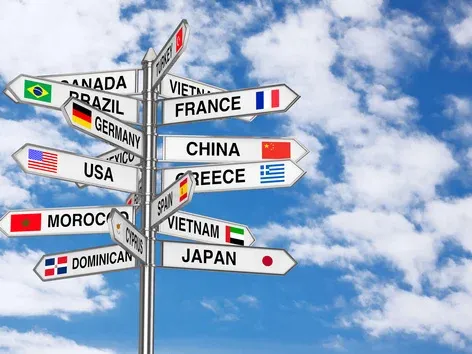
Top Visa-Free Countries in 2026: Where Can You Travel Without a Visa?
Visa-free travel in 2026 depends not only on the destination country but also on the traveler’s passport—Singapore, Japan, South Korea, and the UAE offer access to nearly the entire world, while Ukrainians have access to approximately 149 visa-free destinations. The European Union is gradually introducing the EES and ETIAS digital systems, which are changing the Schengen entry procedure for all third-country nationals. Learn more about the full list of visa-free countries by passport, current stay limits, new rules for entering Europe, and practical tips for travelers
27 Apr. 2026
More details2 min
Travels
Vietnam Digital Arrival Card 2026: New Entry Rules in Ho Chi Minh City
Vietnam is changing entry rules for tourists. Learn how the digital arrival card works, who needs it, and how to prepare for your trip
29 Apr. 2026
More details4 min
Expats
Where Can You Travel With Your Passport? Full Guide by Citizenship
In 2026, passport power reached a record gap between the world’s strongest and weakest passports. The Henley Passport Index has recorded significant changes: the rise of Asian and Middle Eastern passports, the weakening of the positions of the US and the UK, as well as new entry rules for Europe. Learn more about where you can travel with your passport and what has changed in visa regulations
02 May. 2026
More detailsAll materials and articles are owned by VisitWorld.Today and are protected by international intellectual property regulations. When using materials, approval from VisitWorld.Today is required.