

August 15 – The Assumption of the Blessed Virgin Mary: A Holiday in Europe, the History of the Feast, and Unusual Traditions
Table of contents
- Assumption or Dormition: Why One Holiday Has Different Names
- How did the ancient Roman “August holidays” become Ferragosto?
- How did cheap trains start the tradition of beach lunches?
- In which European countries will August 15 be an official holiday?
- Italy on Ferragosto: empty cities, crowded beaches, and the Palio in Siena
- “Summer Easter” in Greece: pilgrims, torch-lit boats, and mysterious snakes
- Poland: A religious holiday and a military parade on the same day
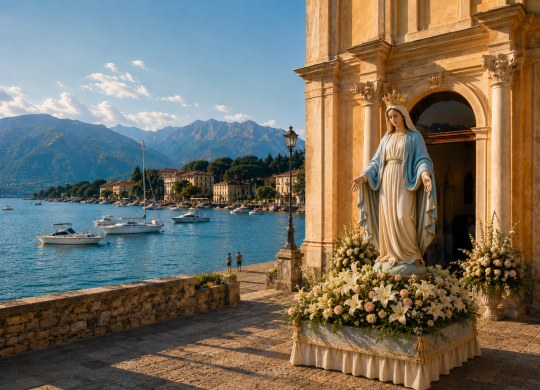
On August 15, banks, government offices, and some stores will be closed in many European countries, while resorts and tourist destinations will experience one of the busiest days of the summer. Learn more about the countries with an official holiday, the origins of Ferragosto, and the unique traditions surrounding the celebration

Every year on August 15, Europe seems to shift into holiday mode. In Italy, cities empty out while beaches fill with vacationers; in Greece, thousands of people head to churches; in Poland, military ceremonies are held; and in France, Spain, and a number of other countries, government offices and banks are closed. In 2026, this date falls on a Saturday, but holiday schedules will still affect the operations of stores, pharmacies, museums, and public transportation.
The reason for this widespread observance lies in a combination of several traditions. Christians celebrate the Assumption or Dormition of the Blessed Virgin Mary, while the Italian Ferragosto dates back to the Roman Empire. Over time, the religious holiday, the long-standing summer vacation, and local customs have merged into one of the most important dates in the European calendar for August.
In our previous article, we wrote about 5 European countries that tourists are hardly visiting in 2026.
Discovering a new country for yourself without the help of travel agents or intermediaries is very simple. All you need is a checklist or a “Travel Guide” from Visit World – a step-by-step guide with all the key information for your trip.
The guide contains information on visa requirements, visa-free entry rules, permitted periods of stay and a list of required documents.
After completing the form, the guide will be sent to your email in PDF format in just a few minutes.
Choose a country and get your travel guide today.

Assumption or Dormition: Why One Holiday Has Different Names
In the Western Christian tradition, August 15 marks the Assumption of the Blessed Virgin Mary. Catholic doctrine holds that, upon the conclusion of her earthly life, the Virgin Mary was taken up into heavenly glory, body and soul. The tradition of honoring this event has existed for many centuries, but it did not become an official dogma of the Catholic Church until November 1, 1950. It was proclaimed by Pope Pius XII in the apostolic constitution *Munificentissimus Deus*.
In Eastern Christianity, the feast is called the Dormition of the Most Holy Mother of God. The word “Dormition” means “falling asleep” and emphasizes the end of Mary’s earthly life. Therefore, the Western tradition focuses more on her bodily and spiritual ascension, while the Eastern tradition recalls her death, resurrection, and passage into eternal life.
An Unusual Theological Nuance
When formulating the Catholic dogma, Pius XII deliberately did not specify whether Mary died before the Assumption. The official document states only that she “completed the course of her earthly life.” Thus, the fact of her physical death was not established as a mandatory tenet of Catholic doctrine.
The date of the celebration in the Eastern Churches depends on the calendar. Communities that use the New Julian or Gregorian calendar observe the Dormition on August 15. Churches that follow the Julian calendar celebrate it on August 28 according to the modern civil calendar.
In our previous article, we wrote about cool spots in France for a vacation without crowds or heat.
How did the ancient Roman “August holidays” become Ferragosto?
The Italian Ferragosto has much older origins than the Christian feast of August 15. Its name derives from the Latin phrase Feriae Augusti, meaning “August holidays.” In 18 B.C., Emperor Octavian Augustus established a period of rest following the completion of the main summer agricultural work.
Originally, the holiday was celebrated on August 1, and the festivities could last for a significant portion of the month. They complemented the ancient Roman festivals marking the harvest and the end of field work.
During this time, people rested, held horse races, and decorated their working animals with flowers. Workers also paid their respects to landowners and received gifts or monetary rewards from them.
After the spread of Christianity, the ancient Roman tradition gradually merged with the Assumption of the Virgin Mary, and the main celebrations shifted to August 15. Thus, Ferragosto became a cultural hybrid in which religious processions coexist with family feasts, trips to the seaside, and massive summer festivals.
In medieval Rome, nighttime processions were held on August 15, involving the clergy, city authorities, and guilds. The streets were decorated with flowers and green arches. Later, the festivities took on unusual forms: for example, in the 17th–19th centuries, Piazza Navona was partially flooded on certain summer days, transforming it into an impromptu city “lake.”
In our previous article, we discussed where to go in the summer without the heat: 4 cool European destinations.
How did cheap trains start the tradition of beach lunches?
The modern custom of spending Ferragosto by the sea became widespread in Italy in the 1930s. Benito Mussolini’s fascist regime organized the so-called Treni popolari di Ferragosto—special trains with cheap tickets for workers and low-income families. They ran from 1931 to 1939 and gave millions of Italians access to seaside and mountain resorts, as well as historic cities.
Passengers were offered two main travel options:
- A one-day trip covering a distance of up to approximately 100 km
- A three-day trip to destinations located about 100–200 km away
The initiative quickly gained popularity. As early as 1931, nearly 460,000 people had used the special trains, and over the entire period of their operation, they carried about 8.8 million passengers. These trips became one of the first manifestations of mass domestic tourism in Italy.
Meals were not included in the ticket price, so passengers brought their own food. Families brought bread, cheese, meat dishes, pasta, vegetables, and seasonal fruits to the coast. What began as a typical travel snack gradually evolved into a full-fledged festive picnic.
The tradition has survived to this day. On Ferragosto, Italians host large family lunches on beaches, in parks, or outside the city. The festive menu may include baked pasta, stuffed vegetables, meat, cheeses, and watermelon, which is why spots at popular resorts are often taken as early as the morning on August 15.
We previously reported that massive wildfires in France and Spain led to the evacuation of over 300,000 people and the closure of roads, campgrounds, and tourist sites.
In which European countries will August 15 be an official holiday?
The Assumption of the Virgin Mary is not a common holiday throughout the European Union. Each country determines its status independently, so on August 15, banks and institutions in one country may be closed, while in a neighboring country they may operate as usual.
In 2026, a nationwide holiday is scheduled in 15 EU countries:
- Austria
- Belgium
- Croatia
- Cyprus
- France
- Greece
- Italy
- Malta
- Poland
- Portugal
- Romania
- Slovenia
- Spain
August 15 is also an official holiday in Andorra, Monaco, San Marino, and the Vatican. In Liechtenstein, this date has dual significance: in addition to the Assumption of the Virgin Mary, the country celebrates its National Day.
In Germany, the status even depends on the specific municipality
In Germany, the Assumption is not included in the federal calendar of public holidays. It is a non-working day in the state of Saarland and in parts of Bavaria.
In Bavaria, the rule applies only in municipalities where the number of Catholics exceeds the number of Protestants. Because of this, neighboring towns may have different schedules
: in one, banks, institutions, and stores will be closed, while in another, they will be open. You can check the status of a specific municipality in the database of the Bavarian State Office for Statistics.
In Switzerland, the situation also depends on the canton. The Assumption is a holiday mainly in Catholic regions, while in other parts of the country, August 15 remains a regular workday.
In our previous article, we discussed the cheapest and most expensive European cities for a vacation in 2026.
Italy on Ferragosto: empty cities, crowded beaches, and the Palio in Siena
In Italy, August 15 is a nationwide holiday and effectively the peak of the summer vacation season. Banks, post offices, government offices, and many small family-run businesses are usually closed. Some companies shut down not just for a single day, but for the entire week surrounding Ferragosto.
In major tourist cities, the situation is somewhat different. Restaurants, cafes, bars, hotels, and shops in the central districts of Rome, Florence, and Venice often remain open due to the influx of travelers. At the same time, museums and cultural sites set their own holiday schedules, and tickets to popular attractions sell out quickly. Seaside resorts operate at full capacity on this day.
The holiday features dozens of local traditions. On the island of Pescatori, located on Lake Maggiore, a statue of the Virgin Mary is carried across the water, accompanied by boats decorated with lights. In Orgosolo, Sardinia, a religious procession and a parade of horsemen in traditional attire take place.
One of the most famous events in August remains the Palio dell’Assunta in Siena. The horse race between the city’s contrade will take place on August 16, 2026, in Piazza del Campo.
The winner will receive not a trophy, but a specially crafted silk banner—the drappellone—depicting the Assumption of the Virgin Mary.
Learn more about the 10 safest islands in the world in 2026 by following the link.
“Summer Easter” in Greece: pilgrims, torch-lit boats, and mysterious snakes
In Greece, the Assumption of the Virgin Mary is called Dekapentavgoustos, meaning “August 15,” and the scale of the celebrations is often compared to that of Easter. After church services and processions in cities and villages, panigiri begin—folk festivals featuring music, dancing, local dishes, and wine.
The most interesting traditions can be seen on the Greek islands:
1. Tinos. Thousands of pilgrims flock to the Church of Panagia Evangelistria. Some of them make the journey from the port to the church on their knees, fulfilling a vow. Celebrations on the island continue until August 23.
2. Paros. In Parikia, celebrations take place near the Church of Panagia Ekatontapiliiani, and in the evening, boats with lit torches appear in the port of Nausos. After the procession, dancing and feasting begin.
3. Lesbos. Pilgrims walk about 25 km from Mytilene to the Church of the Virgin Mary in Agiasos. This is one of the largest religious events in the northeastern Aegean Sea.
4. Kefalonia. In mid-August, small non-venomous snakes with a dark cross-shaped pattern on their heads appear near the Church of Panagia Langouvardi in the village of Markopoulo. According to legend, the Virgin Mary transformed nuns into these snakes to save women from pirates.
The official tourism portal Visit Greece notes that celebrations take place on virtually every island. Due to the large influx of pilgrims and tourists, it is advisable to book ferry tickets, flights, and accommodations in popular destinations well in advance.
In our previous article, we wrote about the TOP 5 uncrowded Mediterranean resorts where you can relax without lines or noise.
Poland: A religious holiday and a military parade on the same day
In Poland, August 15 combines two events: the Catholic Feast of the Assumption of the Blessed Virgin Mary and Polish Armed Forces Day. Both holidays are national holidays, so banks, government offices, post offices, and most large stores will be closed. At the same time, restaurants, gas stations, pharmacies, and small retail outlets where the owner serves customers personally may remain open.
Polish Armed Forces Day commemorates the victory in the Battle of Warsaw in 1920. The decisive turning point in the conflict between Polish forces and the Bolshevik army took place on August 15. In Polish historiography, the battle is also known as the “Miracle on the Vistula,” and the national military holiday marking this date was officially reinstated in 1992.
In 2026, the main military parade will begin on August 15 at 12:00 p.m. on Wisłostrada in Warsaw. At the same time, a parade of Navy ships will take place in the Gulf of Gdańsk.
Travelers in Warsaw should expect road closures, changes to bus routes, and large crowds along Wisłostrada. Traffic restrictions may be in effect not only during the parade but also in the days leading up to it due to rehearsals and the deployment of military equipment.
Are you planning a trip and want to prepare without unnecessary stress? Visit World's travel guide contains key tips for travelers: rules of entry and stay, current requirements for tourists, basic safety, transportation and accommodation. Such a guide will help you quickly navigate a new country, avoid common mistakes during your trip, and plan your route taking into account practical nuances that often go unnoticed by tourists.
We remind you! Popular tourist destinations can be a trap. We have already told you which 8 places in the world Fodor’s advises to avoid in 2026 due to overtourism, environmental risks and social tension – and what alternatives to choose instead.
Products from Visit World for a comfortable trip:
Travel guide for 200 countries;
Legal advice from a local specialist on visa and migration issues;
Travel insurance around the world (please select the country of interest and citizenship to receive services);
Medical insurance all over the world.
We monitor the accuracy and relevance of our information, so if you notice any errors or inconsistencies, please contact our hotline
Frequantly
asked questions
What is celebrated in Europe on August 15?
In which countries is August 15 a public holiday?
Will stores be open in Europe on August 15, 2026?
Will public transportation be running on August 15?
Will the day off be rescheduled since August 15, 2026, falls on a Saturday?
Recommended articles
3 min
Travels
Where to Go During the “Velvet Season”: 5 Best Destinations for a September Getaway
September lets you extend your summer without the sweltering heat, crowded beaches, or peak prices. Learn more about the best vacation destinations for the “velvet season”: from the Italian coast and the Greek islands to the French Riviera and tropical Mauritius
02 Aug. 2026
More details3 min
Travels
Europe's Most Popular Islands for Vacationing in 2026: Top Destinations
European islands are becoming one of the most popular travel destinations in 2026. The number of search queries for lesser-known island destinations is skyrocketing, and travelers are increasingly opting for peaceful destinations over crowded resorts. Learn more about the most popular European islands for vacationing in 2026 and the reasons for their popularity among tourists
02 Aug. 2026
More details3 min
Travels
Popular European capitals often mean high prices, crowded streets, and long lines at major attractions. However, Europe has plenty of lesser-known cities with distinctive architecture, affordable accommodations, interesting cuisine, and a more relaxed atmosphere. Learn more about five destinations for budget-friendly travel without the large tourist crowds
08 Aug. 2026
More details3 min
Travels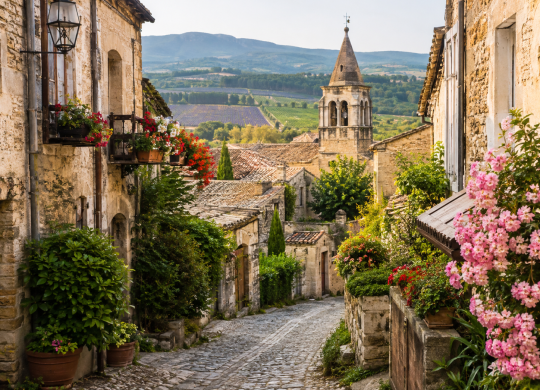
French villages can be just as surprising as Paris, the French Riviera, or the châteaux of the Loire Valley. Among them are villages nestled among lavender fields, Alpine peaks, vineyards, and picturesque river gorges. Learn more about the nine most beautiful villages in France that are worth adding to your upcoming travel itinerary
09 Aug. 2026
More detailsAll materials and articles are owned by VisitWorld.Today and are protected by international intellectual property regulations. When using materials, approval from VisitWorld.Today is required.