

The Most Dangerous Cities for Tourists: Where Theft and Fraud Are Widespread
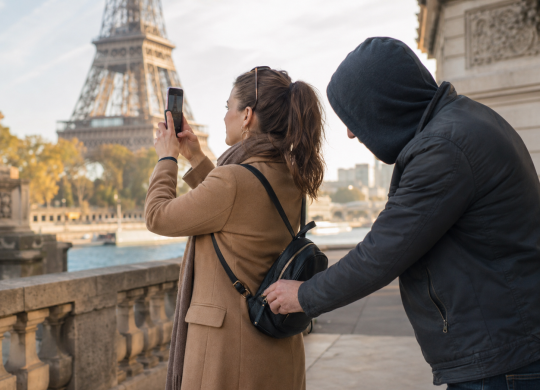
Paris, Las Vegas, and New York topped a new ranking of tourist destinations with a high risk of theft and fraud. Learn more about the top ten cities, dangerous tourist spots, and ways to protect your personal belongings while traveling

Popular attractions, crowded public transportation, and tourist districts create ideal conditions for pickpockets. Criminals take advantage of travelers’ inattention, distract them with conversation, or work in groups, which is why the disappearance of a wallet or phone is often not noticed right away.
Experts at Compare the Market analyzed 34 popular cities around the world and identified the destinations where tourists most frequently report theft and fraud. The top ten includes European and American metropolises, but a high ranking does not mean the entire city is dangerous: the greatest risks are usually concentrated near famous landmarks and transportation hubs.
In our previous article, we discussed how to choose safe accommodation, avoid mistakes, and book a hotel without unnecessary expenses.
Planning a trip abroad and want to protect yourself from unforeseen situations?
Travel insurance from Visit World will cover medical expenses, flight delays, and lost luggage in any country. Get a policy online in a few minutes and travel with confidence!

How was the ranking of the riskiest cities compiled?
The study covered 34 popular tourist cities. Experts analyzed comments posted on TripAdvisor city forums throughout 2025 and counted mentions of four English-language words: “pickpocket,” “stolen,” “theft,” and “scam.”
The number of such mentions was correlated with the number of foreign tourists, and an index per million visitors was calculated. Additionally, they took into account Numbeo data on how much people in each city fear robbery or assault.
The final index was composed of two components:
- 75% – the frequency of online mentions of pickpocketing, theft, and scams
- 25% – the level of concern about potential robbery
The lower a city’s final score, the higher its ranking in terms of risk. The ranking reflects travelers’ experiences and concerns but does not represent official statistics on reported crimes.
In our previous article, we explained how to find cheap last-minute flights using Skyscanner’s tips.
Top 10 Cities with the Highest Risk of Theft and Fraud
Paris took first place, receiving the lowest—and therefore worst—index score. Six European and four American cities made the top ten.
1. Paris, France – 2.28 points. The city recorded 17.32 reports of theft and fraud per million foreign tourists, including 8.03 reports of pickpocketing. Travelers should be especially vigilant near the Eiffel Tower, in Montmartre, and on crowded metro trains. Common scams include fake petitions, “friendship bracelets,” and attempts to distract tourists with conversation.
2. Las Vegas, USA – 10.68 points. The overall rate was 12.48 mentions per million visitors. The city also topped the ranking for the frequency of mentions of fraud—8.04. It’s important to stay vigilant in casinos, nightclubs, and crowded tourist areas, where travelers are often distracted by entertainment.
3. New York, United States – 14.43 points. Researchers recorded 11.46 topic-related mentions per million tourists, including 7.70 mentions of fraudulent schemes. The risk increases on crowded public transportation, near popular landmarks, and in areas with heavy foot traffic. Special attention should be paid to phones, bags, and belongings left unattended.
4. Rome, Italy – 15.20 points. The city recorded 12.17 mentions per million tourists, and for the term “theft,” Rome had the highest score in the ranking—2.58. High-risk areas are located near Roma Termini Station, the Trevi Fountain, the Colosseum, and the Spanish Steps. In crowds, thieves may operate in groups: one person distracts a tourist while another takes their belongings.
5. Los Angeles, USA – 18.25 points. The overall frequency was 9.37 reports per million tourists. The city ranked first in reports of stolen items, with a rate of 2.19. Areas of particular concern include nightlife districts, popular entertainment districts, and Hollywood Boulevard.
6. London, United Kingdom – 19.78 points. There were 4.85 mentions of theft and fraud per million foreign visitors. Pickpockets often take advantage of crowds in the subway, at train stations, on shopping streets, and near famous landmarks. They may work in groups and create artificial crowds or other situations that distract attention.
7. Athens, Greece – 24.30 points. The overall rate was 4.25 reports per million tourists. The greatest risks arise near the Acropolis, in crowded squares, and on public transportation. In such places, you should not carry your wallet or phone in your back pocket or leave your bag open.
8. Sofia, Bulgaria – 25.05 points. Of the 7.14 incident-related mentions per million visitors, 6.43 were related to fraud. Tourists may encounter inflated taxi fares and unfavorable currency exchange rates. The Central Train Station, the Central Bus Station, and the Lion’s Bridge area require particular caution.
9. Barcelona, Spain – 25.85 points. The city received 4.08 topic-related mentions per million tourists, and the level of concern regarding robberies was 60.04 out of 100. The riskiest locations include La Rambla, Plaça de Catalunya, the Gothic Quarter, and Carrer Moncada. Tourists are also advised not to display expensive watches and jewelry near luxury hotels, shops, and nightclubs.
10. Amsterdam, Netherlands – 28.83 points. The overall frequency reached 7.05 reports per million foreign tourists, of which 3.26 involved pickpocketing. It’s important to keep a close eye on your belongings at Dam Square, Central Station, near the Rijksmuseum, and in certain parts of the Red Light District at night. The greatest risk occurs in crowds and when boarding public transportation.
Learn more about the world’s most beautiful airports in 2026 according to the Prix Versailles ranking by following the link.
What are the most common scams targeting tourists?
Pickpockets rarely act at random. Most often, they target people who are taking photos of landmarks, checking directions on their phones, carrying luggage, or trying to figure out a ticket machine.
Common scams include:
- Distraction: One person asks a question, bumps into the tourist, or “accidentally” spills something, while an accomplice steals valuables
- Fake petitions and charity collections: A traveler is asked to sign a document or make a donation, while the scammer gets close to their bag or pockets
- “Friendship bracelet”: A bracelet is placed on the tourist’s wrist without permission, and the scammer then demands payment or uses an argument as a distraction
- “Found ring”: A scammer picks up a piece of jewelry near a tourist, offers to let them keep it, and asks for money
- Overpriced taxi fares: The driver does not turn on the meter, takes a longer route, or quotes an inflated price after the ride ends
- Currency scams: Tourists are offered an unfavorable exchange rate, charged a hidden commission, or given the wrong amount
Theft on the subway, buses, and escalators poses a particular danger. Criminals may create a crowd near the doors, block the passage, or come to a sudden stop in front of a tourist to get close to their bag.
In a previous article, we discussed Europe’s “trap airports”—the destinations where travelers actually end up after purchasing cheap airline tickets.
How can you protect your money, documents, and phone while traveling?
It’s impossible to completely eliminate the risk, but organizing your belongings properly makes it much harder for pickpockets. The most important thing is not to keep all your documents, money, and bank cards in one place.
Before heading out, tourists should:
- Wear a bag across the shoulder in front and always keep the zipper closed
- Avoid putting your phone or wallet in a back pocket
- Divide cash and cards among several secure locations
- Leave unnecessary documents and large sums of money in the hotel safe
- Save digital copies of your passport, tickets, and insurance policy
- Enable the phone’s tracking and remote lock features
- Do not leave your smartphone on a table in a café or on an open terrace
- Use official taxi apps and check the fare before starting the ride
On public transportation, it’s best to keep your backpack in front of you and your hand on the bag’s zipper. If a stranger persistently tries to strike up a conversation, asks you to sign a document, or gets too close, you should step away and immediately check your belongings.
No matter how well thought-out your itinerary is, there is always room for force majeure when traveling. Unexpected medical expenses, transportation delays, or luggage problems can ruin your plans and budget. Travel insurance helps you avoid unnecessary worries in such situations. You can apply for a travel insurance policy for a specific trip online at Visit World - quickly and without unnecessary bureaucracy!
Take out a policy online at Visit World and enjoy your trip without any unnecessary worries!
We remind you! Popular European tourist destinations are becoming increasingly crowded, so travelers are looking for alternatives without the crowds. In 2026, attention is turning to countries that remain off the beaten path but offer unique experiences, affordable prices, and an authentic atmosphere. Read more about 5 European countries that are rarely visited by tourists.
Products from Visit World for a comfortable trip:
Travel guide for 200 countries;
Legal advice from a local specialist on visa and migration issues;
Travel insurance around the world (please select the country of interest and citizenship to receive services);
Medical insurance all over the world.
We monitor the accuracy and relevance of our information, so if you notice any errors or inconsistencies, please contact our hotline
Frequantly
asked questions
Does this ranking mean it’s dangerous to travel to Paris, Rome, or Barcelona?
Where are pickpockets most active?
Should you carry your passport with you while sightseeing?
Does travel insurance cover stolen items?
Who should you call after a theft in Europe?
Recommended articles
2 min
Travels
The New Wolf Trail Route: 3,500 km on foot from Poland to Italy
A new hiking trail called the Wolf Trail, nearly 3,500 km long, has opened in Europe. It connects the coasts of the Baltic and Adriatic Seas and passes through six countries. Learn more about the trail, its main stages, the duration of the trip, and conditions for hikers
29 Jul. 2026
More details3 min
Travels
Europe's Most Popular Islands for Vacationing in 2026: Top Destinations
European islands are becoming one of the most popular travel destinations in 2026. The number of search queries for lesser-known island destinations is skyrocketing, and travelers are increasingly opting for peaceful destinations over crowded resorts. Learn more about the most popular European islands for vacationing in 2026 and the reasons for their popularity among tourists
02 Aug. 2026
More details3 min
Travels
Popular European capitals often mean high prices, crowded streets, and long lines at major attractions. However, Europe has plenty of lesser-known cities with distinctive architecture, affordable accommodations, interesting cuisine, and a more relaxed atmosphere. Learn more about five destinations for budget-friendly travel without the large tourist crowds
08 Aug. 2026
More details3 min
Travels
French villages can be just as surprising as Paris, the French Riviera, or the châteaux of the Loire Valley. Among them are villages nestled among lavender fields, Alpine peaks, vineyards, and picturesque river gorges. Learn more about the nine most beautiful villages in France that are worth adding to your upcoming travel itinerary
09 Aug. 2026
More detailsAll materials and articles are owned by VisitWorld.Today and are protected by international intellectual property regulations. When using materials, approval from VisitWorld.Today is required.