

Traveling Through Croatia by Car: Fines, Highways, Parking, and Important Traffic Rules
Table of contents
- What are the most important traffic rules in Croatia for tourists?
- Which traffic violations in Croatia carry the harshest fines?
- How do toll highways work in Croatia?
- How much do popular routes to the coast cost?
- Crolibertas: How Will Toll Payments on Croatian Highways Change?
- Parking in Croatia: Why It’s Best to Plan Ahead Along the Coast
- What documents are required for a road trip through Croatia?
- What to Do If You’re Involved in a Car Accident in Croatia?
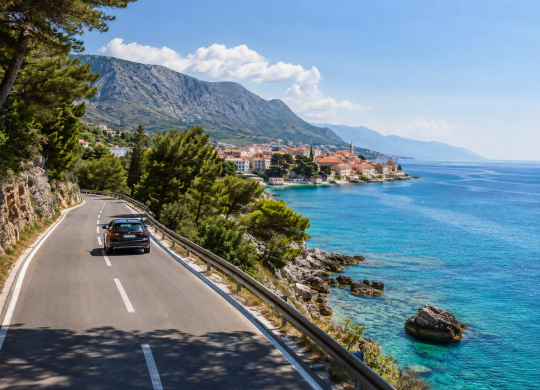
Croatia does not have a road vignette, but most major highways are toll roads, and the toll amount depends on the route and vehicle category. Added to this are seasonal traffic jams on roads leading to the Adriatic, speed cameras, and specific parking rules in popular tourist cities. Find out how Croatian highways work, what traffic rules and fines are in effect in 2026, and what you should consider before taking a road trip

In Croatia, a car is especially convenient for trips along the Adriatic coast: in a single trip, you can visit Zagreb, Plitvice Lakes, Zadar, Split, and the small resorts of Dalmatia. However, the country’s road system has its own peculiarities: instead of a vignette, you generally pay for the actual distance traveled on the highway, and in the summer, traffic on routes heading toward the coast increases dramatically. The official operator, Hrvatske autoceste, uses both traditional toll booths and the ENC electronic toll system.
In this guide, we’ll break down which traffic rules apply in Croatia in 2026, how much traffic violations cost, how to pay for highway tolls, where parking issues arise, and what documents you should prepare for your trip.
Are you planning a trip to Europe by car?
In many countries, highways are tolled and require an electronic road vignette. This is a digital permit that confirms payment for the use of toll roads and is checked automatically by the license plate number - without stickers and paper receipts. Making a vignette online before you travel will help you avoid fines, travel delays, and unpleasant situations during inspections.

What are the most important traffic rules in Croatia for tourists?
In Croatia, you should pay special attention to speed limits: on roads leading to resorts, in built-up areas, and along the Adriatic coast, limits can change quite frequently. The standard speed limit in built-up areas is 50 km/h, and on highways, it’s 130 km/h.
Outside of towns, the standard limits for passenger cars are as follows:
- 90 km/h—on most regular roads outside of towns
- 110 km/h—on expressways
- 130 km/h — on highways
On certain sections, road signs indicate lower speed limits, and these take precedence. This is particularly common on mountain roads, in tunnels, at interchanges, and on roads near the coast.
Another local requirement is the use of daytime running lights or low beams. These are mandatory for cars during the winter months and for motorcycles and mopeds year-round. In tunnels, low beams must be turned on regardless of the season.
All passengers must wear seat belts if the vehicle is equipped with them. Separate requirements apply to child restraint systems for transporting children, so families with young children should check the type of car seat required before renting a car.
Alcohol rules depend on the driver’s category. For most passenger car drivers, the permissible blood alcohol concentration is up to 0.5‰, but a zero-tolerance limit applies to young drivers under 24 and certain professional categories.
Using a handheld phone while driving is prohibited. In practice, this means it’s best to plan your route before starting your trip or use a hands-free device, especially on unfamiliar coastal roads where you have to keep an eye on turns, cyclists, and heavy seasonal traffic all at once.
To learn more about which European countries have introduced new speed limits on highways, follow the link.
Which traffic violations in Croatia carry the harshest fines?
In Croatia, minor violations may be relatively inexpensive to resolve, but penalties increase sharply for dangerous speeding or driving under the influence of a significant amount of alcohol. It’s important for tourists not to rely on an “average fine amount”: Croatian law sets different ranges depending on where the violation occurred and how serious it is.
The most telling example is speeding. In built-up areas, the fine is:
- €30 — if the speed limit is exceeded by up to 10 km/h
- €60 — by more than 10–20 km/h
- €130 — exceeding the limit by more than 20–30 km/h
- From €390 to €920 — exceeding the limit by more than 30–50 km/h
- From €1,320 to €2,650 or up to 60 days of detention — if the speed exceeds the limit by more than 50 km/h
Outside built-up areas, the penalties are slightly different. For example, exceeding the speed limit by more than 30–50 km/h costs €260, and by more than 50 km/h—from €660 to €1,990.
Using a cell phone while driving without a hands-free device carries a fine of €130. The law permits phone use only in a way that does not require the driver to hold the device in their hand and does not impair their ability to drive safely.
The same €130 fine applies for not wearing a seat belt. This applies not only to the driver but also to passengers who do not wear seat belts in seats equipped with them. Separate requirements apply to children: children under 150 cm must be transported in an appropriate child restraint system, although for children between 135 and 150 cm in the back seat, the law permits the use of a standard seat belt under certain conditions.
We previously discussed the most common reasons tourists are fined on European roads in 2026.
Drinking and Driving
For most Category B drivers, the legal limit is up to 0.5‰. However, fines increase rapidly once this limit is exceeded:
- Over 0.5‰ up to 1.0‰ — €390–660
- Over 1.0‰ up to 1.5‰ — €660–1,990
- Over 1.5‰ — €1,320–2,650 or up to 60 days in jail
For young drivers and certain professional categories, a zero-tolerance policy applies. Even a reading of up to 0.5‰ can result in a €90 fine for them.
Another practical detail: in Croatia, headlights must be on during the day from November 1 through March 31. Violations are subject to a €30 fine. For motorcycles and mopeds, this requirement applies year-round.
In our previous article, we discussed where in Europe it’s cheapest and fastest to charge an electric vehicle.
How do toll highways work in Croatia?
There is no vignette system for passenger cars in Croatia. Instead of a fixed fee for a specific period, a pay-per-trip system is in place: the amount depends on the distance traveled and the vehicle category. This is how most of the major highways operate, which tourists use to travel from Zagreb to Rijeka, Zadar, Split, or further south.
Most routes use a closed-loop toll system. Upon entering the highway, the driver receives a ticket, and upon exiting, the system determines the distance traveled and calculates the toll. On some shorter sections, an open-loop system with a fixed fee may be in effect.
There are several ways to pay at HAC toll plazas:
- Cash in euros
- Bank card
- Via the ENC/ETC electronic system, where a special device in the car automatically communicates with the equipment in the toll lane
For a one-time trip, ENC is not required: tourists can easily use the regular lanes and pay by card or cash. However, for those who frequently travel on Croatian highways, the electronic system is more convenient, as it allows for faster passage through toll stations.
The price depends not only on the route but also on the vehicle class. A standard passenger car with two axles and a height of up to 1.90 m falls into Category I. Cars with trailers, taller vehicles, and RVs may fall into a higher-priced category, so owners of such vehicles should check the classification before their trip.
In practice, the biggest problem in the summer isn’t the toll itself, but the lines at the toll plazas. On peak Saturdays in July and August, traffic heading toward the Adriatic increases sharply, so on the A1 and A6 routes, it’s worth allowing extra time and monitoring traffic conditions via the official HAC service.

Learn more about current toll rates in Poland for 2026 by following the link.
How much do popular routes to the coast cost?
For a standard Category I passenger car, tolls in Croatia remain moderate, but on long routes to the Adriatic, they should be budgeted for as a separate item. The most expensive trips are from Zagreb to central and southern Dalmatia.
According to the current rates from Hrvatske autoceste, in 2026, a one-way trip will cost approximately:
- Zagreb — Rijeka (Grobnik) — €10.10
- Zagreb — Zadar — €17.60–18.20, depending on the exit chosen
- Zagreb — Šibenik — €22.10
- Zagreb — Split — €26.40
In other words, the highway toll alone for a Zagreb–Split–Zagreb trip will cost a passenger car approximately €52.80, not including fuel, parking, and any additional toll sections further along the route. For a car with a trailer, a tall van, or a camper, the toll will be higher, as these vehicles may fall into a different category.
For a trip to Zadar, it’s important to pay attention to the specific exit: from Zagreb to Zadar centar, the Category I toll is €17.60, and to Zadar istok — €18.20. On short stretches, the difference is small, but the system clearly illustrates the main principle of Croatian highways: you pay only for the route you actually use.
Before setting out, it’s best to check the toll using the HAC calculator or table for your specific entry and exit points. This is especially useful if your route leads not just to a major city, but to a resort, an island, or a small town, where you’ll have to drive the last part of the way on toll-free regional roads.
Learn more about the world’s best countries for road trips in 2026 by following the link.
Crolibertas: How Will Toll Payments on Croatian Highways Change?
Croatia is preparing to phase out traditional toll booths with barriers. The new electronic toll collection system will operate on the Multi-Lane Free Flow principle: vehicles will be able to travel on toll highways without stopping, and the toll itself will continue to depend on the distance traveled and the vehicle category.
For passenger cars, there will be two main methods of identification. Drivers will be able to use an ENC device or register their license plate, which the system will automatically recognize as they pass through. For heavy-duty vehicles, the ENC will be mandatory, while for passenger cars it will be optional.
The project covers the country’s entire network of toll highways, including roads operated by Hrvatske autoceste, BINA-ISTRA, and Autocesta Zagreb–Macelj. The implementation contract was signed on September 24, 2024, and the official completion deadline is two years. Approximately €130 million in grant funding has been allocated for the project.
For tourists, the main change will be very practical: there will no longer be a need to take a ticket upon entry, find the correct lane at the toll plaza, or wait in line at the barrier. The difference should be particularly noticeable in the summer, when toll plazas on routes to the Adriatic often become additional sources of traffic congestion.
Until the new system is fully operational, drivers in 2026 will need to use the current payment methods—tickets, cash registers, bank cards, and ENC. Hrvatske autoceste continues to publish rates and rules specifically for this system.
Learn more about traffic rules, fines, toll roads, and regulations for driving in Austria in 2026 by following the link.
Parking in Croatia: Why It’s Best to Plan Ahead Along the Coast
In Croatian resort towns, the problem is often not finding your way to the center, but figuring out where to leave your car once you arrive. In the summer, the number of cars increases dramatically, while parking spaces near historic city centers and waterfronts are limited. Rates and zones are set by local municipalities, so there are no uniform rules across the entire country.
In Split, for example, the cost depends on the zone and the season. During the summer, rates at on-street parking lots range from approximately €0.80 to €1.20 per hour, while at some off-street lots, the price can be significantly higher. Payment can be made via parking meters and digital services, including Smart Splitparking.
Zadar also has designated parking zones, and prices increase during the tourist season. For example, in Zone 1, the base rate is €0.80 per hour, and from June 15 to August 31, it is €1.60.
Dubrovnik requires the most attention. Starting June 2, 2025, a special traffic regime will be in effect around the historic center, designed to reduce traffic congestion. This is no longer just a matter of paid parking: vehicle access to parts of the area is governed by specific rules, so you shouldn’t try to drive as close as possible to the Old Town without checking your route in advance.
For a trip along the coast, it’s more practical to find a large official parking lot near the center in advance and then get around on foot or by public transportation. This is especially true for Dubrovnik and Split, where, during peak season, finding a random spot near the historic part of the city can take significantly longer than the trip itself.
In our previous article, we discussed traffic rules in Italy in 2026, Autostrade tolls, fines, and key considerations for road travel.
What documents are required for a road trip through Croatia?
For a road trip through Croatia, it’s worth checking in advance not only your personal documents but also your vehicle registration and insurance papers. If your route passes through several countries, it’s important that all documents remain valid for the entire journey.
Typically, a driver needs to have:
- A valid driver’s license
- Vehicle registration certificate
- A passport or other document for crossing the border
- Proof of liability insurance
- Documents from the rental company, if the car is rented
Licenses issued in EU and EEA countries are recognized in Croatia. Additional requirements may apply to driver’s licenses from non-EU countries, so it’s best to check before your trip whether an international driver’s permit or an official translation is required.
If the vehicle is registered outside the EU, be sure to verify that the insurance coverage is valid in Croatia and in all transit countries. This is especially important for routes through Hungary, Slovenia, Austria, or Bosnia and Herzegovina.
In a previous article, we reported that Europe is introducing mandatory surveillance cameras to monitor drivers.
Green Card for International Road Trips
For vehicles that require a Green Card insurance certificate for international travel, it’s best to obtain it before departure and verify that the dates align with your itinerary.
Through Visit World, you can obtain a Green Card online before traveling to Croatia and other European countries. Before purchasing, make sure the policy covers all countries on your route and remains valid without interruption from the moment of departure until your return.
We previously reported that Europe is introducing new measures to combat drunk driving: cars won’t start after alcohol consumption.
What to Do If You’re Involved in a Car Accident in Croatia?
In the event of an accident in Croatia, it’s important not to rush to leave the scene, even if the damage seems minor. First, you should stop, turn on your hazard lights, secure the accident scene, and check for any injured parties.
If anyone is injured, you must call emergency services at 112. You should also involve the police if the parties cannot agree on the circumstances of the accident, if there is significant damage, if anyone is injured, or if there are issues with one of the drivers’ documents.
For a minor accident with no injuries, you need to exchange the following basic information with the other driver:
- Name and contact information
- License plate number
- Insurance information
- Driver’s license details
- Vehicle registration details
It’s also helpful to take a few photos of the accident scene, the position of the vehicles, the damage, and any road signs and markings. If you have a European Accident Statement form, you should fill it out together with the other driver—this significantly simplifies the subsequent settlement process with the insurance company.
A special note for foreign drivers: if the vehicle is seriously damaged and needs to be towed out of Croatia, it’s best to contact your insurer or roadside assistance service immediately. This will help ensure that the towing, repairs, and any potential expenses outside the country are handled properly.
After an accident, do not sign any documents whose contents you do not understand. If there is a language barrier or a dispute over who is at fault, it is best to wait for the police and have the circumstances officially documented.
Are you traveling abroad with your own car or a rented car?
Before traveling, it is important to check whether a road vignette is required for toll roads in the countries of your route. Failure to have a valid vignette can result in fines and automatic camera recordings of violations. Getting an electronic vignette from Visit World is an easy way to travel more relaxed, without unnecessary expenses and surprises on the road!
We remind you! Traveling through Europe in 2026 does not have to be expensive, even despite the general rise in prices. Analysts have compiled a rating of the most affordable destinations where you can combine relaxation, experiences, and moderate expenses. Follow the link to learn about budget locations in Europe that are worth considering for your 2026 vacation.
Products from Visit World for a comfortable trip:
Travel guide for 200 countries;
Legal advice from a local specialist on visa and migration issues;
Travel insurance around the world (please select the country of interest and citizenship to receive services);
Medical insurance all over the world.
We monitor the accuracy and relevance of our information, so if you notice any errors or inconsistencies, please contact our hotline.
Frequantly
asked questions
Do I need a vignette to drive in Croatia?
How do I pay for toll roads in Croatia?
How much does it cost to travel from Zagreb to Split?
What is the speed limit on Croatian highways?
Can you receive a traffic ticket in Croatia after you’ve already returned home?
Recommended articles
2 min
Transport
Electronic Toll in Belgium 2027: How Much Will Drivers Pay to Use the Roads?
Belgium is preparing to launch a toll system for highways and regional roads. The new rates will apply to owners of passenger vehicles weighing up to 3.5 metric tons, and the toll amount will depend on the vehicle’s environmental class. Learn more about the terms of the new electronic vignette, categories of exemptions, fine amounts, and the system’s launch date
15 Jul. 2026
More details3 min
Transport
Traveling to Italy by Car in 2026: Traffic Rules, Fines, Toll Roads, and ZTLs
Traveling through Italy by car makes it easy to reach small towns, the coast, and regions that are much harder to reach by public transportation. At the same time, drivers need to be aware of toll highways, restricted traffic zones (ZTL), parking rules, and hefty fines for traffic violations. Learn more about traffic rules in Italy in 2026, Autostrade tolls, fines, and the key details of traveling by car
14 Aug. 2026
More details3 min
Transport
Driving in Austria in 2026: Traffic Rules, Fines, Vignettes, and Toll Roads
To travel through Austria by car, it’s not enough to simply purchase a vignette: additional tolls apply on certain Alpine routes, and violations of the rules can result in significant fines. Drivers should also be aware of speed limits, the Rettungsgasse emergency lane, winter equipment requirements, and the specifics of the digital vignette. Learn more about traffic laws, fines, toll roads, and the rules for driving in Austria in 2026
16 Aug. 2026
More details2 min
Transport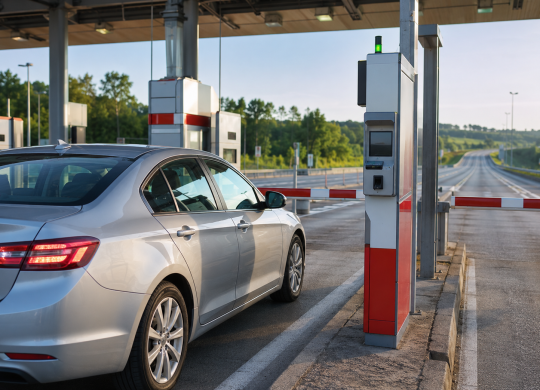
Toll Roads in Poland in 2026: Current Rates and Payment Methods
Most Polish highways are toll-free for passenger cars, but tolls apply on certain sections of the A1, A2, and A4. Learn more about current rates, available payment methods, and the rules for using the e-TOLL system in 2026
07 Aug. 2026
More detailsAll materials and articles are owned by VisitWorld.Today and are protected by international intellectual property regulations. When using materials, approval from VisitWorld.Today is required.