

What You Need to Know Before Traveling to Canada in 2026: Visas, Documents, and Entry Requirements
Table of contents
- Do you need a visa to travel to Canada?
- What documents do you need to prepare before your trip?
- What questions might you be asked at the Canadian border?
- What currency should you bring to Canada, and how do you pay for purchases?
- Customs Rules: What Can and Cannot Be Brought Into Canada?
- Internet, Mobile Service, and Electricity
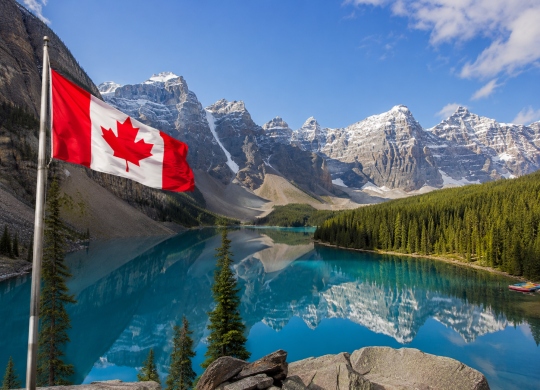
Planning to visit Canada? Before your trip, it’s a good idea to familiarize yourself with the entry requirements, prepare the necessary documents, check the visa rules, and learn about customs restrictions. Find out what documents tourists need, what questions you might be asked at the border, how much cash you’re allowed to bring in, whether health insurance is required, and what other details will help you avoid unpleasant surprises during your trip
Canada welcomes millions of tourists every year, attracting visitors with its majestic Rocky Mountains, Niagara Falls, modern metropolises, national parks, and high level of safety. At the same time, the country has its own immigration and customs regulations that all foreign travelers must follow.
Before booking tickets, it is important to check whether a visa or an Electronic Travel Authorization (eTA) is required, prepare the necessary documents and proof of financial means, and familiarize yourself with the rules for bringing in cash, medications, food, and other items. Even with a valid visa, the final decision on whether to grant entry rests with a Canadian border services officer.
This article compiles up-to-date information on Canada’s entry rules, required documents, requirements for tourists, customs restrictions, payment options, mobile service, and other practical tips to help you prepare for your trip and avoid common mistakes.
In our previous article, we discussed how to choose safe accommodation, avoid mistakes, and book a hotel without unnecessary expenses.
Planning a trip abroad and want to protect yourself from unforeseen situations?
Travel insurance from Visit World will cover medical expenses, flight delays, and lost luggage in any country. Get a policy online in a few minutes and travel with confidence!

Do you need a visa to travel to Canada?
The first step before planning your trip is to determine which entry permit you need. Canada uses two main systems for admitting foreign nationals: a tourist visa (Visitor Visa or Temporary Resident Visa) and an Electronic Travel Authorization (eTA). The type of document depends on the traveler’s citizenship, method of entry into the country, and purpose of the trip.
Who needs a tourist visa?
Citizens of most countries must obtain a Visitor Visa (Temporary Resident Visa) for a tourist trip to Canada. It is affixed to the passport and confirms that the holder meets the requirements for a temporary stay in the country. The application is submitted online through the Government of Canada’s portal, after which the applicant typically undergoes a biometric data collection process.
When reviewing the application, immigration authorities assess:
- A valid foreign passport
- Purpose of the trip
- Financial ability to cover the cost of the stay
- Ties to the country of residence (employment, education, family, property)
- Intention to leave Canada upon completion of the trip
- Absence of serious violations of immigration or criminal laws
When is an eTA sufficient?
Citizens of countries that have a visa-waiver agreement with Canada may travel by air with an eTA instead of a visa. The eTA is electronically linked to the passport and is typically issued online within a short period of time.
However, the eTA is valid only for air travel. If a traveler enters Canada by car, bus, train, or sea from the United States, the requirements may vary depending on their citizenship. Before traveling, it is advisable to check your country’s eligibility on the Canadian government’s dedicated website.
How long is the permitted stay?
In most cases, tourists are allowed to stay in Canada for up to six months per entry. However, this is not an automatic rule: the final duration is determined by a border services officer during the inspection. Unless the officer specifies a different date, the permitted length of stay is usually up to six months from the date of entry.
Does a visa or eTA guarantee entry?
No. Even after obtaining a visa or eTA, the final decision is made by a Canadian border services officer directly at the port of entry. The officer may ask you to confirm the purpose of your trip, proof of sufficient funds, your place of residence, a return ticket, or other documents. If the officer concludes that the conditions for a temporary stay are not met, entry may be denied.
In our previous article, we provided a detailed guide on how foreigners can find a job in Canada in 2026.
What documents do you need to prepare before your trip?
Even if your visa or eTA has already been issued, it’s worth double-checking your documents before departure. The airline may ask to see some of them during check-in, while a border services officer will request the rest upon arrival in Canada. The better prepared you are, the faster you’ll pass through border control.
International Passport
Your passport must be valid for the entire duration of your stay in Canada. If you apply for an eTA, the authorization is automatically linked to the passport used during the application process. If you obtain a new passport, you must apply for a new eTA.
It is also recommended to check that there are blank pages available for border stamps and to ensure that the passport is not damaged.
Visa or eTA
Before traveling, you must ensure that:
- Your tourist visa is still valid
- Your eTA has not expired
- Your passport number matches the one provided when applying for the authorization
It’s a good idea to save the eTA confirmation or a copy of your visa on your phone and keep a paper copy in case you don’t have internet access.
Tickets and Itinerary Confirmations
A border officer may ask to see:
- A return ticket or a ticket to your next destination
- Your travel itinerary
- Confirmation of domestic flights or transportation reservations (if applicable)
These documents help confirm that the traveler truly plans to leave Canada after the trip is over.
Proof of Accommodation
It is recommended to have documents confirming your place of stay during the trip. These may include:
- A hotel reservation
- Apartment or house rental
- An invitation letter from friends or relatives specifying the address of their residence
If a traveler plans to visit several cities, it is advisable to have booking confirmation for at least the first few days of their stay.
Documents proving financial means
A border services officer has the right to verify that the traveler can cover the costs of their trip on their own. The Canadian government does not set a fixed minimum amount—it all depends on the duration of the trip, the itinerary, and planned expenses.
The following may be required as proof:
- Bank statement
- International bank cards
- Traveler’s checks (if used)
- Proof of income or a sponsorship letter, if the trip is being funded by another person
Health Insurance
For most tourists, health insurance is not a mandatory requirement for entry; however, the Canadian government strongly recommends purchasing a policy before traveling.
Medical care for foreigners in Canada can be very expensive. Even a routine doctor’s visit or a trip to the emergency room often costs hundreds of Canadian dollars, and hospitalization can cost thousands. That is why travel insurance will help you avoid significant unexpected expenses in the event of illness, injury, or other emergencies.
Learn more about temporary work permits in Quebec in 2026 by following the link.
What questions might you be asked at the Canadian border?
Upon arrival in Canada, all foreign travelers undergo border control conducted by the Canada Border Services Agency (CBSA). During the inspection, the officer evaluates not only your documents but also whether the purpose of your trip meets the conditions for temporary stay. It is at this stage that the final decision on whether to grant entry into the country is made.
In most cases, the interview takes only a few minutes if the traveler can clearly answer the questions and provide supporting documents if necessary.
What questions are most commonly asked of travelers?
A border services officer may ask:
- What is the main purpose of your trip to Canada?
- How long do you plan to stay?
- Which cities do you plan to visit?
- Where will you be staying?
- Do you have a return ticket?
- Who is financing the trip?
- How much money do you have?
- Have you visited Canada before?
- Are you carrying any goods that must be declared?
The answers must match the information provided in the visa or eTA application and other documents.
What documents might you be asked to show?
Although a passport is often sufficient, the officer has the right to request additional documents, including:
- Confirmation of a hotel reservation or other accommodations
- A return flight ticket
- A bank statement
- Itinerary
- An invitation letter from relatives or friends (if the trip involves staying with them)
- Travel insurance
It is recommended to have all these documents available in both paper and electronic formats.
Why might entry be denied?
Having a valid visa or eTA does not automatically guarantee entry. If an immigration officer determines that a traveler does not meet the requirements for a temporary stay, they may deny entry into the country.
The most common reasons:
- Inability to confirm the purpose of the trip as tourism
- Insufficient funds to cover the stay
- Discrepancies between the traveler’s answers and the submitted documents
- Lack of proof of accommodation or a return ticket
- Violations of immigration laws during previous trips
- Providing false information on the visa application form or during border control
To avoid problems, answer questions calmly, truthfully, and concisely, and prepare in advance all documents that can confirm the purpose of your trip and your intention to return home after it is complete.
We previously reported that Canada is raising the work experience requirement for Express Entry starting in 2026.
What currency should you bring to Canada, and how do you pay for purchases?
The official currency of Canada is the Canadian dollar (CAD). This is the currency used for most transactions in stores, restaurants, hotels, public transportation, and tourist attractions. For everyday expenses, tourists do not need to carry large amounts of cash—Canada is one of those countries where cashless payments are accepted virtually everywhere.
Do you need cash?
While traveling, you can easily get by with an international debit or credit card. Visa, Mastercard, and American Express are accepted at almost all stores, cafes, hotels, museums, and tourist attractions. Apple Pay, Google Pay, and other contactless payment methods are also widely supported.
A small amount of cash will still come in handy for small purchases, tips, or visits to small local shops and farmers’ markets. For most tourists, a few hundred Canadian dollars will be more than enough.
Can you pay with U.S. dollars?
Although some border areas, tourist shops, or hotels may accept U.S. dollars, you shouldn’t count on it. Most often, merchants set their own exchange rate, which is less favorable than those offered by banks or official currency exchange offices. Therefore, it’s better to use Canadian dollars or a bank card for everyday expenses.
Do I need to declare large sums of money?
If a traveler is carrying 10,000 CAD or more (or the equivalent of this amount in another currency), these funds must be declared when crossing the border.
The amount subject to declaration includes:
- Cash
- Bank checks and traveler’s checks
- Money transfers and other negotiable financial instruments
Simply carrying a large sum of money is not a violation. Problems arise only when a traveler fails to report it to customs authorities. In such cases, the funds may be temporarily seized, and the owner may face a fine or further inspection.
Why might the price at the register be higher than the price tag?
Many tourists are surprised that in Canada, the final cost of an item often differs from the price listed on the shelf. The reason is that the sales tax is, in most cases, not included in the listed price.
At checkout, the federal GST is added to the item’s price, and depending on the province, PST or HST may also be added. The total tax burden ranges from 5% to 15%, so the final amount on the receipt will almost always be slightly higher. This is standard practice not only in Canada but also in most North American countries.
Learn more about new document requirements for digital nomads at the Canadian border by following the link.
Customs Rules: What Can and Cannot Be Brought Into Canada?
Canada has some of the strictest customs and biosecurity rules in the world. Upon entry, all travelers must declare the goods they are carrying, and certain categories of items are subject to restrictions or a complete ban. Failure to comply with these requirements may result in fines, confiscation of property, or even criminal liability.
Alcohol and Tobacco Products
Tourists who have reached the province’s minimum age for purchasing alcohol (18 or 19 years old, depending on the region) may import a limited quantity of alcoholic beverages duty-free. Similar rules apply to tobacco products—duty-free allowances apply only to government-set limits.
If the permitted limits are exceeded, the goods must be declared, and the corresponding duties and taxes must be paid.
Food
Food items are most often the cause of problems during customs inspection. Even if a product is permitted for import, it must still be declared.
Particularly strict restrictions apply to:
- Meat and meat products
- Dairy products
- Fresh fruits and vegetables
- Seeds, plants, and soil
Specific requirements may vary depending on the tourist’s country of origin and the current epizootic or phytosanitary situation.
Medications
Medications for personal use are generally permitted to be brought into Canada. However, it is recommended to transport them in their original packaging with the manufacturer’s labeling, and for prescription medications, to have a copy of the prescription or a doctor’s note in English or French.
Customs authorities pay particular attention to medications containing narcotic or psychotropic substances, so it is advisable to check before your trip whether any additional restrictions apply to them.
Drones, Weapons, and Other Special Items
Firearms, ammunition, pepper spray, and other self-defense devices are subject to strict controls. Some of these items may be imported only with special permits, while others are completely prohibited.
If a traveler plans to bring a drone, they should familiarize themselves with the rules for its use in advance. Canada has specific requirements for drone flights, particularly near airports, in national parks, and other restricted areas.
Why is it important to fill out the customs declaration honestly?
Canadian customs authorities recommend declaring all items about which you have any doubts. If a particular item is permitted for import, it will simply be cleared after inspection. However, concealing information or providing false details on the declaration can lead to much more serious consequences: ranging from fines and confiscation of items to a future entry ban.
That is why it’s important to review the current regulations on the official Government of Canada website before your trip, especially if you plan to bring food, medication, large sums of money, or items subject to special controls.
In our previous article, we reported that Quebec is reopening the PEQ program.
Internet, Mobile Service, and Electricity
Canada has a modern telecommunications infrastructure, so tourists can easily use mobile service, high-speed internet, and contactless services. However, there are a few things to keep in mind to avoid unnecessary expenses and unpleasant surprises upon arrival.
Mobile Service and Internet
Major carriers such as Rogers, Bell, and Telus operate in the country, along with a number of budget brands. Travelers can use their carrier’s international roaming service or purchase a local SIM card or eSIM.
If you’re planning a short trip, an eSIM—which can be activated before departure—is often the most convenient option. For longer stays, it’s more cost-effective to purchase a local plan with mobile data. Free Wi-Fi is available in most hotels, cafes, restaurants, airports, shopping malls, and public libraries.
What types of electrical outlets are used in Canada?
Canada uses Type A and Type B outlets, and the standard voltage is 120 V at 60 Hz.
If your electrical devices were purchased in countries that use 220–240 V, you should check their specifications before your trip. Most modern chargers for phones, laptops, and tablets support both voltage standards, so a plug adapter is usually all you need. However, if a device does not support 120 V, you may need a special voltage converter.
No matter how well thought-out your itinerary is, there is always room for force majeure when traveling. Unexpected medical expenses, transportation delays, or problems with luggage can ruin your plans and budget. Travel insurance helps you avoid unnecessary worries in such situations. You can apply for a travel insurance policy for a specific trip online at Visit World - quickly and without unnecessary bureaucracy!
Take out a policy online at Visit World and enjoy your trip without any unnecessary worries!
We remind you! Popular European tourist destinations are becoming increasingly crowded, so travelers are looking for alternatives without the crowds. In 2026, attention is turning to countries that remain off the beaten path but offer unique experiences, affordable prices, and an authentic atmosphere. Read more about 5 European countries that are rarely visited by tourists.
Products from Visit World for a comfortable trip:
Travel guide for 200 countries;
Legal advice from a local specialist on visa and migration issues;
Travel insurance around the world (please select the country of interest and citizenship to receive services);
Medical insurance all over the world.
We monitor the accuracy and relevance of our information, so if you notice any errors or inconsistencies, please contact our hotline
Frequantly
asked questions
Do I need a visa for a tourist trip to Canada?
Can I travel to Canada without health insurance?
How much money do you need to have to enter Canada?
Can I work in Canada on a tourist visa?
How long can a tourist stay in Canada?
Recommended articles
3 min
Expats
Canada 2026: Updated Permanent Residency Rules, New Passport Fees, and Changes to Work Permits
Spring 2026 brought nine significant updates to the Canadian immigration system—ranging from revised fees for citizenship and passports to new provincial powers in selecting candidates for permanent residency. The updates also affected settlement programs, family sponsorship, and employment conditions in rural communities. Learn more about each of the changes, the new fee amounts, and the practical implications for applicants
14 Apr. 2026
More details2 min
Work
How to Get a Job in Canada as a Foreigner in 2026: Complete Guide
Canada is one of the most immigrant-friendly countries in the world, but a real path to work here requires a clear plan. Find out what work permits are available in 2026, how the Express Entry and Working Holiday Visa systems work, which professions are in high demand, how much Canadian employers pay, how to write a good resume, and where to look for jobs - all in one detailed guide
16 May. 2026
More details3 min
Expats
Canada 2026: New Document Requirements for Digital Nomads at the Border
Canada has updated its guidelines for border officers regarding the screening of digital nomads and remote workers. Travelers must now carry documentary proof of a foreign source of income to cross the border. Learn more about the new document requirements, employment restrictions, and how to prepare for a trip to Canada in 2026
02 Jun. 2026
More details2 min
Residence permit
Quebec Reopens PEQ Program: Who Can Obtain Permanent Residence in Canada in 2026–2028
Quebec is temporarily reopening one of its most popular immigration programs for foreign workers and graduates. Find out who will be able to apply for permanent residence through the PEQ, what the conditions will be in place in 2026, and how the changes will affect candidates for Canada
13 Jun. 2026
More detailsAll materials and articles are owned by VisitWorld.Today and are protected by international intellectual property regulations. When using materials, approval from VisitWorld.Today is required.