

Quietest Countries in the World 2026: Go2Africa's Silent Travel Index
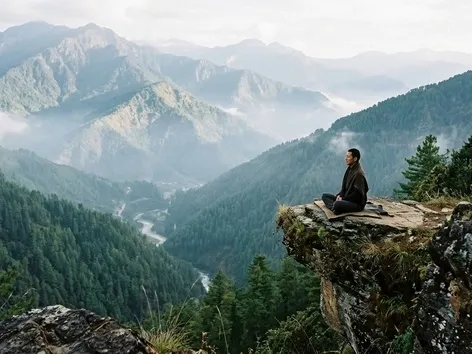
Go2Africa has compiled the world's first Silent Nations Index, ranking countries by noise levels and potential for solitude. Find out which destinations topped the list of the quietest and noisiest countries in the world and why the search for silence has become one of the top travel trends of 2026

Modern life is rarely quiet. Notifications, car horns, work chats, neighbors behind the wall - background noise has become so familiar that we stop noticing it until we get to where it really isn't. And it is this feeling, and not new photo locations, that travelers will increasingly travel for in 2026.
The research team of the tour operator Go2Africa decided to measure this feeling in numbers and created the Quiet Nations Index - a rating of countries in the world by noise pollution and potential for true solitude.
The material includes a top of the quietest and noisiest destinations on the planet, as well as an explanation of why the search for silence in 2026 has become a separate direction in tourism.
The ranking of the best countries for digital nomads in 2026 is available at the link.
Are you planning a long trip away from home – a safari in Africa, weeks in the mountains of Asia or months in a quiet corner of South America? At such moments, it is important to have reliable protection in case of unforeseen illness or injury, because treatment abroad for foreigners is often much more expensive than at home.
Health insurance covers the costs of medical care, emergency evacuation and other force majeure during your stay abroad. Take out a policy in advance and set off on your quiet trip with peace of mind.

Why has the topic of noise suddenly become so relevant?
The World Health Organization recognizes noise pollution as the second most harmful environmental threat to human health – right after polluted air. According to the organization, humanity loses at least a million years of healthy life annually due to traffic noise alone. The consequences are not limited to hearing problems: constant background noise has been linked to sleep disorders, hypertension and an increased risk of cardiovascular disease. If the trend continues, by 2050, about 2.5 billion people could be living with some degree of hearing loss.
The travel industry has already responded to this demand. Hotel operator Hilton, in its 2026 global trends report, notes that the desire to rest and recover has become the main motive for travel for the first time - this was the answer of 56% of tourists surveyed, while 37% named time in nature as a priority, and 36% - improving mental health. In the media, this phenomenon has already received its own name - “hushpitality”, or “quiet hospitality”: hotels and resorts are consciously designing spaces to minimize the sound load on guests. In parallel, “quietcations” are gaining momentum – trips built around a break from digital noise, rather than a list of must-see locations.
Visit World services for tourists, migrants, and expats: Insurance | Guides | Legal advice
How was silence calculated?
Go2Africa analysts assessed each country using seven indicators: population density, tourist flow density, share of rural and sparsely populated areas, area of protected land, and density of vehicles, airports, and railway lines. The data was taken from open databases such as Worldometer, the World Bank, and Protected Planet, as well as from government statistics of various countries. Each indicator was converted into a score from 0 to 100 – the higher the score, the quieter and calmer the country – and then all seven scores were combined into a final “quiet rating”.
The authors of the study immediately made an important caveat: a high quiet score does not mean that the country is ready for tourists. Chad and the Central African Republic are at the top of the list not because they have a developed tourist infrastructure, but because foreigners are rarely seen there. Therefore, for practical advice on safe destinations, Go2Africa advises to focus primarily on countries with a more developed infrastructure - such as Namibia or Botswana - and always check the latest safety recommendations before traveling.
Find the most amazing natural places in Europe at the link.
Top 10 Quietest Countries in the World
The leader of the rating with a quiet score of 89.44 was Bhutan, a mountain kingdom in the Himalayas that for years has deliberately restrained the flow of tourists through a system of licensed guides and a mandatory daily fee for "sustainable tourism." More than 39,000 square kilometers of forested mountains and terraced valleys are practically uninhabited, which gave the country the first place. Overall, the top 10 quietest countries in the world are as follows:
- Bhutan – 89.44
- Namibia – 86.69
- Botswana – 80.86
- Zambia – 80.64
- Gabon – 80.61
- Venezuela – 80.20
- Chad – 79.82
- Central African Republic – 78.18
- Mongolia – 75.53
- Bolivia – 75.40
The African continent has secured more than half of the places in the top 25, and this is not a coincidence, but the result of a conscious strategy. Namibia (second place) is the almost deserted Namib Desert, the oldest on the planet, where there are less than four people per square kilometer, and at night one of the clearest starry skies in the world opens. Botswana and Zambia have been betting on a premium, low-crowded safari for years: instead of crowded state reserves, there are private concessions, limited vehicle permits, and hours when you might not see another car all day. Zambia is also unique in that almost half of its territory is officially protected by the state. Gabon, in turn, has preserved more than 85% of its territory under dense equatorial forests and, back in 2002, allocated more than a tenth of its land area for national parks.
Also read about 5 underrated cities in Europe for budget travel without crowds of tourists.
Outside Africa, the top ten includes Venezuela with its Tepui plateau and Orinoco Delta, Chad, which has almost no railways or mass transit, Mongolia with its steppes and Gobi Desert, where there are fewer than 11 cars per kilometer of road, and Bolivia with its Salar de Uyuni salt flats.
Europe is completely absent from the top list - the highest position among European countries is occupied by Estonia, and that is only 34th, followed by Finland (39th) and Sweden (40th). The reason is simple: dense construction, an extensive road and rail network, and high tourist flow outweigh even a significant share of rural land. Oceania is represented by New Zealand (17th place) and Australia (20th), although the compilers of the rating note: the real positions could be even higher if there were enough statistical data for the smaller island states of the region. The USA ended up somewhere in the middle of the list, in 92nd place - a huge territory and a relatively low population density are compensated by the densest network of airports in the world.
And where in the world is the noisiest?
The opposite pole of the rating was occupied by small and densely populated states, mostly island or with a limited territory, where urban development has come close to the borders.
- Singapore – 6.78
- Maldives – 8.48
- Barbados – 10.12
- Qatar – 15.45
- Lebanon – 18.13
Singapore topped the “noisy” rating not because of the chaos on the streets, but because of the very density of life: more than 23 thousand tourists per square kilometer and only 30% of the territory is under rural development. The Maldives may surprise with the number two position – it is really quiet on private island resorts, but official statistics take into account the capital Male, one of the most densely populated locations on the planet. Barbados got on the list because of cruise tourism: almost 818 thousand arrivals by cruise liners every year create a constant background noise from transport and aviation even on a small island.
Search for the most beautiful villages in France that are worth visiting at least once in a lifetime by following the link.
Why is silence the new luxury in travel?
According to Ashley Gerran, an expert on African safaris at Go2Africa, in recent years, clients have been less likely to ask for “more activities” on their itinerary, and instead are looking for space and the opportunity to be alone with nature. After years of constant notifications and busy schedules, she observes, people are drawn to places where the loudest sound is birdsong at dawn.
This fits with the overall picture of the industry: silence has ceased to be a side effect of a remote location and has become a separate criterion for choosing a destination, along with price or climate. For some, this means a week-long safari in Botswana without another jeep nearby, for others, it’s just a hotel in Finland, where all you can hear outside the window is the forest.
If you are planning a longer trip in search of such silence – especially in the direction of Africa, South America or Asia – it is worth taking care of not only the route, but also medical protection in case of unforeseen situations, because it is in remote regions that access to quality medical care is often limited.
The quietest corners of the planet are often located where the medical infrastructure is much less developed than in large cities – which is why Namibia, Mongolia or the hinterland of Bolivia attract those seeking solitude, but at the same time require additional caution. If you get injured during a safari in the savannah or feel unwell in the highlands of Bhutan, it can be difficult to quickly get qualified help without a pre-arranged insurance policy.
Travel medical insurance covers not only outpatient and inpatient treatment, but also emergency medical evacuation to the nearest specialized facility, which is especially critical in remote regions. The policy can be issued for a period of several days to a year - depending on the duration of your trip in search of peace.
Take care of insurance before departure to enjoy peace, not anxiety for your own health.
Reminder! Venice and Amsterdam are tightening restrictions for tourists again this season due to constant crowds on the embankments. We have already told you which less visited European cities with canals are worth your attention in 2026 - from industrial Hamburg to fabulous Copenhagen.
Photo - generated by Gemini
Products from Visit World for a comfortable trip:
Travel guide for 200 countries;
Legal advice from a local specialist on visa and migration issues;
Travel insurance around the world (please select the country of interest and citizenship to receive services);
Medical insurance all over the world.
We monitor the accuracy and relevance of our information, so if you notice any errors or inconsistencies, please contact our hotline.
Recommended articles
3 min
Travels
Gdzie jechać na Słowacji tego lata: Trasy do zamków, jaskiń i gorących źródeł
Słowacja pozwala na odkrywanie średniowiecznych zamków, wędrówki wzdłuż górskich wodospadów i relaks w naturalnym basenie termalnym — wszystko to w jednej podróży. Dowiedz się więcej o najciekawszych letnich destynacjach w kraju, idealnych na wycieczki jednodniowe i spokojny wypoczynek z dala od najbardziej zatłoczonych kurortów
26 lip. 2026
More details3 min
Podróż samolotem
Jak szybciej pokonać jet lag: Co jeść i pić po locie
Po długim locie, twojemu ciału może zająć kilka dni, aby dostosować się do nowej strefy czasowej. Dowiedz się więcej o tym, które jedzenie i napoje mogą pomóc w redukcji zmęczenia, problemów ze snem i dyskomfortu trawiennego — oraz czego unikać podczas podróży
01 sie. 2026
More details2 min
Travels
Nepal przechodzi na cyfrowy system wydawania zezwoleń na wjazd turystyczny. Zagraniczni podróżnicy będą mogli składać swoje wnioski zdalnie i otrzymać decyzję już następnego dnia po wypełnieniu formularza aplikacyjnego. Dowiedz się więcej o dacie uruchomienia e-wizy, opłatach, procesie aplikacyjnym i możliwościach uzyskania wizy po przyjeździe
12 sie. 2026
More details1 min
Travels
Dostępność wakacji w Europie 2026: Kto może (a kto nie może) pozwolić sobie na urlop
Miliony Europejczyków wciąż odkładają swoje wymarzone wakacje z powodu braku funduszy, chociaż ogólna sytuacja znacznie się poprawiła w ciągu ostatniej dekady. Dowiedz się, które kraje będą liderami pod względem dostępności wakacji w 2026 roku, dlaczego kraje skandynawskie wykazują niespodziewany wzrost „ubóstwa wakacyjnego” i gdzie podróżowanie wciąż jest luksusem
13 sie. 2026
More detailsAll materials and articles are owned by VisitWorld.Today and are protected by international intellectual property regulations. When using materials, approval from VisitWorld.Today is required.