

Major Flooding in Bangkok: Neighborhoods Submerged and Transportation Disruptions
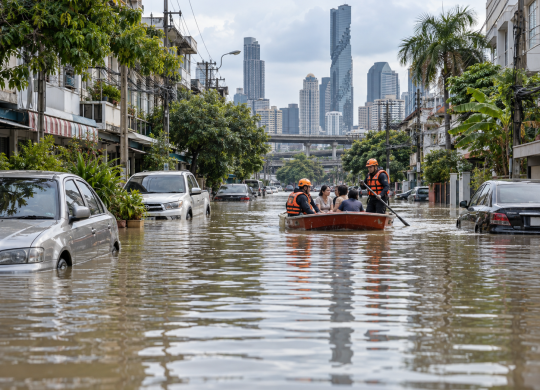
Widespread flooding in Bangkok has submerged residential neighborhoods and disrupted transportation. Authorities are organizing evacuations and providing assistance to residents. Learn more about the situation as of September 28, the impact of the heavy rains, and airport operations

As of the morning of September 28, 2026, flooding in Bangkok had affected approximately 700,000 people and 329,000 households. Following heavy rains, all 50 districts of Thailand’s capital were declared natural disaster areas. The water flooded homes and roads, forcing some residents to evacuate and causing transportation disruptions. As of September 28, more than 400 municipal schools were closed.
Planning a trip abroad?
Insurance from the Visit World portal will help you avoid unnecessary risks. The policy covers the costs of medical treatment, emergency assistance, and unforeseen situations abroad, so that even in the event of delays or route changes, you remain protected and can focus on your trip rather than on problems.

What caused the massive flooding in Bangkok?
Heavy rains in Bangkok continued almost nonstop from September 24 to September 26. Approximately 300 mm of rain fell over about 48 hours, and in some areas, the accumulated rainfall reached 320 mm. The rains were associated with a low-pressure system. The canals overflowed, and water spilled onto roads and into residential neighborhoods.
Drainage efforts are complicated by a constant inflow from surrounding areas. When pumping stations lower the water level in the canals, they are immediately refilled by water from the flooded areas. The Prawet-Burirom and Sen-Sep canals remain particularly important for draining the eastern part of the capital.
New overnight rainfall has exacerbated the flooding in Thailand’s capital. By the morning of September 28, approximately 62 mm of rain had fallen in the Nong Chok area, 55 mm in Lat Krabang, and 52 mm in Minburi. Additional water poured into areas that were already suffering from flooding.
In our previous article, we discussed Hurricane Polo 2026, its strength, path, and potential impacts.
Flooded homes and evacuations: how the flooding has affected residents
The flooding in Bangkok has affected approximately 700,000 people and 329,000 households across the capital. These figures cover flooding of varying severity: from restricted access to homes to flooded houses from which people had to be evacuated. The situation remains most severe in the eastern districts, where overflowing canals are trapping water in residential neighborhoods.
The most severe consequences of the flooding in Bangkok were recorded in the eastern part of the city. In Lat Krabang, flooding affected approximately 30,000–40,000 people; in Khan Na Yao, another 30,000–40,000; and in Bang Kapi, about 20,000. In Lak Si, approximately 10,000 residents were affected. Water also remained in the residential neighborhoods of Saphan Sung and Suan Luang, particularly near the canals.
Water seeped into homes and stores, flooded roads, and partially submerged cars. On some streets, residents had to wade through water up to their knees or thighs. The flooding cut off the usual routes to their homes and forced some residents to leave their homes.
The evacuation of Bangkok residents who cannot move on their own is particularly challenging.
By the morning of September 28, approximately 1,500 bedridden patients and other people in need of care had been transported to city hospitals. At the same time, people remained in the flooded neighborhoods who were unable to obtain food or drinking water on their own or leave their homes.
In the Kheha Rom Klao residential area, the reception center for evacuees had to be moved to the King Mongkut’s Institute of Technology due to the large number of people arriving for help. Providing food to residents remaining in flooded communities has become one of the main tasks for city services.
The city needs prepared meals, drinking water, mobile kitchens, and transportation for rescue operations. Small flat-bottomed boats are needed for narrow, flooded alleys, and high-clearance vehicles are required to transport people and cargo. The extent of property damage has yet to be determined.
Previously, we reported on El Niño 2026, the countries at risk, and the potential impacts on weather, travel, and food prices.
School Closures, Days Off, and Transportation Disruptions
Due to the flooding in Bangkok, the government has declared September 28 and 29 as special days off for civil servants in the capital and three neighboring provinces. The decision is intended to reduce the number of trips and relieve traffic congestion. It does not mean a complete shutdown of all institutions: urgent official business may be carried out at the discretion of supervisors. More than 400 schools under the city administration were also closed on September 28.
Public transportation in Bangkok is operating with restrictions that vary by route. A report from the Department of Highways lists seven impassable sections within the capital. Among them are sections of Route 31 between Din Daeng, Ngam Wong Wan, and Don Mueang. In total, the agency reported 228 flooded road sections in 26 provinces, 56 of which were impassable.
The disruptions also affected airline passengers. At Suvarnabhumi Airport on September 26–27, Thai Airways passengers faced flight delays and long waits for their luggage. Due to flooded roads, some ground handling staff were unable to get to work. The situation was further complicated by malfunctioning baggage carts. Airport authorities asked the carrier to urgently increase staffing levels and replace or repair the equipment.
In a previous article, we reported that forest fires swept across Europe in 2026: which countries were hit the hardest.
What do tourists traveling to Bangkok need to know?
According to the latest verified reports, Bangkok’s Suvarnabhumi and Don Mueang airports continue to receive and dispatch flights. However, airport operations do not guarantee on-time departures or smooth transfers: flooded roads are making travel difficult, and ground handling delays may affect schedules. Thailand’s aviation authorities recommend checking your flight status directly with the airline and allowing extra time for travel.
Before traveling to Bangkok during the floods, it’s important to check not only your flight ticket but also the conditions at your specific destination:
1. Contact your hotel.
Confirm whether the entrance is accessible, if electricity and water are available, and if a shuttle service is available.
2. Plan your route to the airport. Ask your driver or shuttle service to check for flooding before departure. Do not rely solely on the estimated travel time shown on your navigation app.
3. Check the ticket change policy. Some airlines have introduced assistance for passengers who cannot reach the airport. Rescheduling your trip or retaining the value of your ticket for future use depends on the carrier’s policies.
4. Keep essentials in your carry-on luggage. Documents, medications, chargers, and basic items will be necessary in case your checked baggage is delayed.
If your baggage has not arrived, you must file a delayed baggage report with the airline. Thai Airways passengers can contact the call center at +66 2 356 1111. For information regarding AOT airports, the 24-hour hotline 1722 is available in Thailand.
Are you preparing for a trip abroad in 2026?
Medical insurance from the Visit World portal will provide reliable support during your trip, especially in the context of flight changes and unstable schedules. The policy covers medical expenses, emergency assistance, and other unforeseen situations outside the country, so you can feel confident even when plans have to be adjusted at the last minute.
We remind you! Croatia is stepping up its fight against drunken tourists by introducing new restrictions in popular resort cities. Split became the first city in the country to introduce strict rules on alcohol sales this summer. Read more about the new bans, hefty fines for tourists, and changes in Croatia's tourism strategy.
Products from Visit World for a comfortable trip:
Travel guide for 200 countries;
Legal advice from a local specialist on visa and migration issues;
Travel insurance around the world (please select the country of interest and citizenship to receive services);
Medical insurance all over the world.
We monitor the accuracy and relevance of our information, so if you notice any errors or inconsistencies, please contact our hotline
Recommended articles
2 min
Events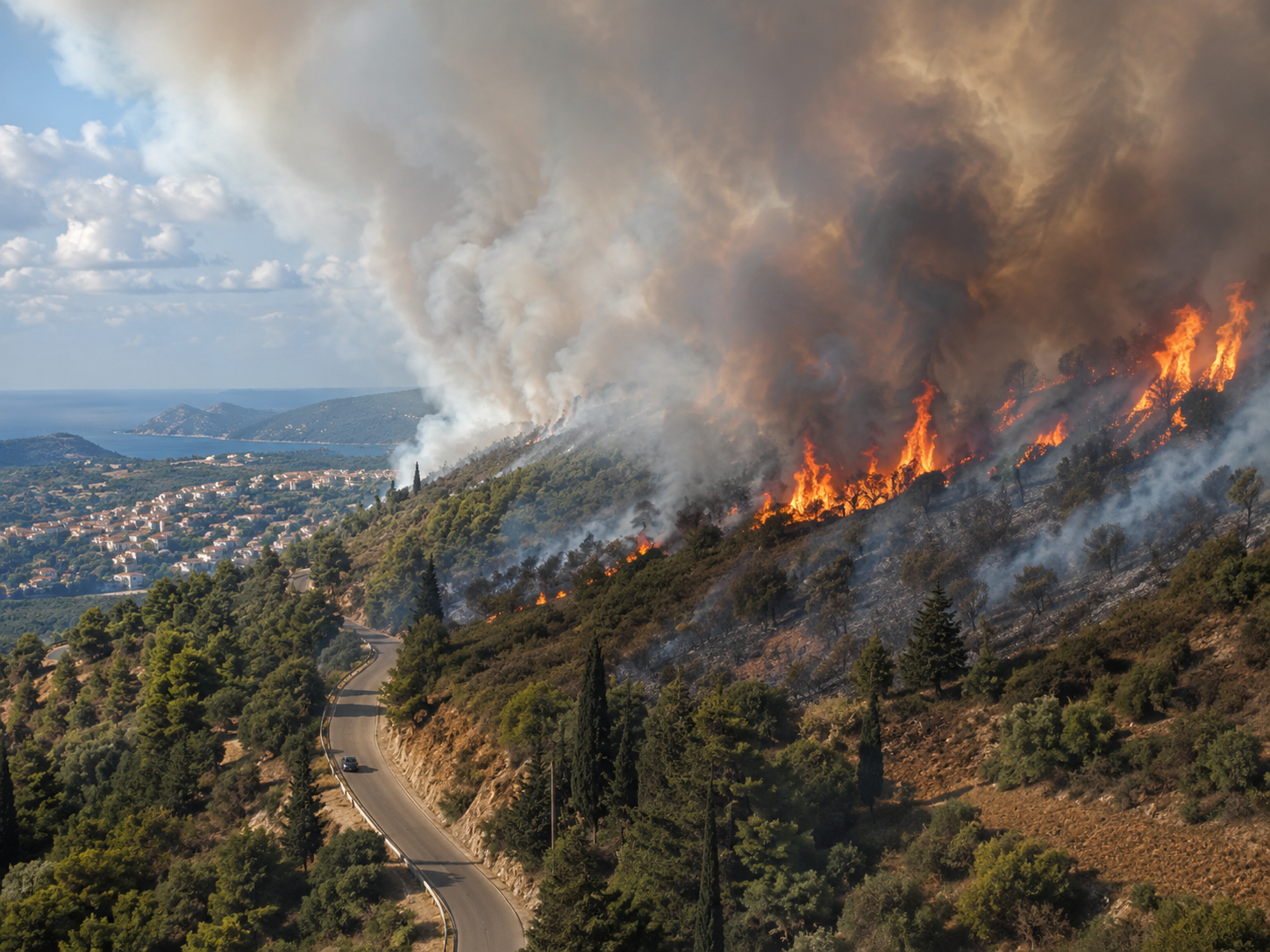
Pożary lasów przetoczyły się przez Europę w 2026 roku: Które kraje zostały najbardziej dotknięte?
Pożary lasów w Europie latem 2026 roku objęły setki tysięcy hektarów, a w niektórych krajach skala pożarów znacznie przekroczyła długoterminowe średnie. Sytuacja była najcięższa w Hiszpanii i Francji, podczas gdy wysokie poziomy zagrożenia pożarowego obejmowały również inne części kontynentu. Dowiedz się więcej o zasięgu pożarów w Europie, krajach najbardziej dotkniętych oraz aktualnych zagrożeniach dla podróżnych
14 sie. 2026
More details2 min
Expats
Zmiana czasu na czas zimowy 2026: Kiedy zegary będą przestawione?
Jesienią 2026 roku dziesiątki krajów przestawią zegary na czas zimowy. Sprawdź dokładne daty zmiany czasu w Europie, USA, Australii i Azji
22 wrz. 2026
More details3 min
Events
El Niño 2026 staje się coraz silniejszy: Gdzie spodziewać się powodzi, suszy i ekstremalnych upałów
El Niño szybko się nasila i, według prognozy WMO, może osiągnąć kategorię „bardzo silną” do końca 2026 roku. Zjawisko to jest już powiązane z suszami, pożarami lasów i opóźnionym sezonem deszczowym w niektórych częściach Azji, a inne regiony również odczują jego wpływ tej zimy. Dowiedz się więcej o El Niño 2026, krajach zagrożonych i potencjalnych skutkach dla pogody, podróży i cen żywności
22 wrz. 2026
More details3 min
Events
Huragan Polo 2026: Burza kategorii 5 zagraża wybrzeżu Meksyku
Huragan Polo wzmocnił się do burzy kategorii 5 i osiągnął prędkości wiatru do 285 km/h, stając się jednym z najpotężniejszych cyklonów na wschodnim Pacyfiku. Wybrzeże Meksyku jest narażone na intensywne opady deszczu, powodzie błyskawiczne, osuwiska i niebezpieczne fale. Dowiedz się więcej o huraganie Polo 2026, jego sile, trasie i potencjalnych skutkach
23 wrz. 2026
More detailsAll materials and articles are owned by VisitWorld.Today and are protected by international intellectual property regulations. When using materials, approval from VisitWorld.Today is required.