

Praca i zatrudnienie w Liechtensteinie: perspektywy zawodowe i wymagania dla poszukujących pracy
Table of contents
- Why You Should Consider Liechtenstein for Working Abroad
- What professions are in demand in Liechtenstein?
- Salary Levels and Working Conditions in Liechtenstein
- Types of work visas and work permits in Liechtenstein
- How to Obtain a Work Visa in Liechtenstein: A Step-by-Step Guide
- Resources for finding a job in Liechtenstein
- Important details for migrant workers
- Work Guide from Visit World: A Step-by-Step Plan for Finding Employment Abroad
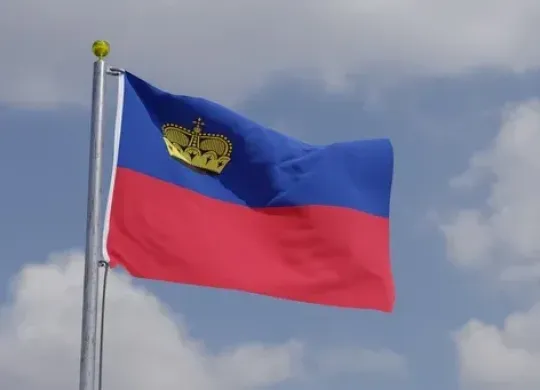
Liechtenstein is one of Europe’s smallest countries, with a strong economy and some of the highest wages on the continent. Every year, the country attracts foreign workers in the fields of finance, IT, engineering, and healthcare, but it has strict limits on the number of residence and work permits issued. Learn more about employment conditions, in-demand professions, and the procedure for obtaining a work visa in Liechtenstein
Liechtenstein is one of the smallest yet wealthiest countries in Europe, with low unemployment and a stable economy. Every year, the country attracts thousands of foreign workers from all over the world. Liechtenstein’s labor market has its own unique characteristics: a limited number of residence permits, high qualification requirements, and special rules for cross-border workers.
We’ll cover employment conditions, in-demand professions, salary levels, taxes, and the step-by-step process for obtaining a work visa in the article below.
Planning to work abroad and not sure where to start?
The employment guide from the Visit World portal includes step-by-step instructions on preparing documents, obtaining permits, and adapting to a new workplace.

Why You Should Consider Liechtenstein for Working Abroad
Liechtenstein offers foreign workers several significant advantages. The country has a highly developed economy with strong sectors in financial services, precision engineering, and IT. The standard of living here is one of the highest in the world, and the social security system includes high-quality healthcare, education, and well-developed infrastructure.
The country’s official language is German, though English is widely used in business and international settings. Its geographical location in the heart of Europe, bordering Switzerland and Austria, provides convenient transportation links to major European cities. Additional advantages include low corporate taxes, a favorable business environment, political stability, and a high level of security.
By the way, we discussed the pros and cons of living in Liechtenstein in a previous article.
What professions are in demand in Liechtenstein?
Liechtenstein’s labor market drives demand for specialists in several key sectors:
- Financial services — banking, asset management, insurance, accounting, risk management, and compliance.
- Information technology — software development, data analytics, cybersecurity, and IT project management.
- Engineering — precision engineering and electronics, where Liechtenstein has a well-developed manufacturing sector.
- Healthcare — doctors, nurses, pharmacists, and medical researchers, particularly in geriatrics, cardiology, and radiology.
- Hospitality and tourism — hotel management, tour guides, event planners, and restaurant staff.
- International trade and business development — sales, marketing, and logistics specialists in import-export and multinational companies.
- Law and compliance — lawyers and specialists with experience in banking and financial regulation.
- Research and development — researchers, technologists, and academics.
Salary Levels and Working Conditions in Liechtenstein
Liechtenstein is among the countries with the highest wages in Europe. Specific amounts depend on the industry, qualifications, and experience of the employee, though general working conditions are clearly regulated by law.
The workweek ranges from 45 to 48 hours. Employees are guaranteed 20 days of paid annual leave and 20 weeks of maternity leave. There are 15 public holidays celebrated throughout the year.
Visit World services for tourists, migrants, and expats: Insurance | Guides | Legal advice
Taxes and Social Insurance for Employees
Personal income tax in Liechtenstein is progressive and ranges from 2.5% to 22.4% depending on income level. The standard VAT rate is 8.1%.
The social insurance system requires mandatory contributions from both the employer and the employee. The total rate for the employer is 4.9%, and for the employee, 4.7% of gross wages.
Employee contributions are distributed as follows: old-age and survivors’ insurance (AHV)—3.95%, disability insurance (IV)—0.75%, unemployment insurance (ALV)—0.5%.
Employer contributions include: AHV — 4.15%, IV — 0.75%, family allowance (FAK) — 1.9%, administrative costs — 0.2875%, ALV — 0.5%.
How a foreigner can move to Liechtenstein in 2026 — we explain here.
Types of work visas and work permits in Liechtenstein
The procedure for obtaining a work permit in Liechtenstein depends on the employee’s citizenship.
Swiss citizens do not need a work permit but must remain residents of Switzerland. Each year, the government issues only 17 residence permits for Swiss citizens, of which 12 are for those engaged in paid employment and 5 for those who are not working.
EU/EEA citizens are entitled to work without a full work permit but are required to register with the Migration and Passport Office within 10 days of starting work and must remain residents of their home countries. For cross-border commuting, a special permit is required, which is valid for one year and must be renewed annually. The total number of residence permits for EEA citizens is 72 per year, of which 56 are for employed individuals. Half of these permits are issued through a lottery, and the other half are issued directly by the government.
Citizens of countries outside the EU/EEA, including citizens of the Philippines, Uzbekistan, and Algeria, may obtain one of two types of permits:
- Temporary Residence Permit (Category L) — issued for up to 12 months for managers, specialists, and skilled workers.
- Residence Permit (Category B) — for individuals with a job offer for a period exceeding one year. The applicant must confirm their qualifications and experience, as well as demonstrate that no suitable candidates could be found in the local labor market, in EEA countries, or in Switzerland.
An employer in Liechtenstein must provide evidence of the foreign worker’s competence and qualifications. Permits are granted to individuals who fall into one of the following categories: managers, specialists, skilled workers, or workers with many years of experience.
How to Obtain a Work Visa in Liechtenstein: A Step-by-Step Guide
The process of obtaining a work visa for third-country nationals involves several sequential steps. It is important to note that due to the limited number of residence permits and the complexity of the application process, it is recommended to begin the process well in advance.
Key steps:
- Receive a job offer from an employer in Liechtenstein.
- Consult with the nearest embassy or consulate regarding specific visa requirements, as conditions may vary depending on the applicant’s citizenship.
- Gather a complete set of documents: a valid passport, passport-sized photos, a completed visa application form, proof of qualifications and work experience, and payment of the visa fee.
- Submit the documents along with the application to the embassy.
- Wait for a decision and confirmation of the next steps after the application is approved.
Some third-country nationals are eligible for visa-free entry to Liechtenstein for short-term stays of up to 90 days; however, a valid work permit is required in any case to work legally.
Important information you need to know for traveling to Liechtenstein — is compiled in this article.
Resources for finding a job in Liechtenstein
The list of job search platforms in Liechtenstein is limited, but there are several reliable resources:
- EURES Job Mobility Portal — the European Employment Service portal with information on job openings, living conditions, and working conditions.
- Jobs.li — a local portal with job openings across various sectors of Liechtenstein’s economy.
- Liechtensteinische Landesverwaltung (LLV) — the official resource for public sector job openings.
- LinkedIn — an international professional platform that allows you to search for job openings and connect with employers in Liechtenstein.
Important details for migrant workers
Most foreign workers in Liechtenstein are cross-border commuters—they live in Switzerland, Austria, or Germany and commute to work daily. To actually reside in Liechtenstein, you must obtain a residence permit, which the government issues in very limited numbers each year.
For citizens of non-EU/EEA countries, the best chances of finding employment are primarily for highly qualified specialists and managers.
It is also important to note that the employer must prove that there are no suitable candidates among citizens of Liechtenstein, the EEA, and Switzerland.
Visa and residency requirements vary depending on the employee’s citizenship, so each situation must be considered on a case-by-case basis.
Work Guide from Visit World: A Step-by-Step Plan for Finding Employment Abroad
The Visit World portal has prepared a detailed work guide for migrant workers to help navigate all stages of relocation and employment: from searching for job openings and preparing documents to adapting to a new workplace.
The guide contains up-to-date information on the requirements of different countries, common mistakes when applying for permits, and practical tips for a successful start to your career abroad.
Order the work guide from Visit World to prepare for employment as effectively as possible!
Reminder! In previous articles, we discussed the countries where salaries are growing the fastest and will allow for a better quality of life in 2026.
Photo: Magnific
Products from Visit World for a comfortable trip:
Checklist for obtaining a visa and necessary documents for Liechtenstein;
Legal advice on immigration to Liechtenstein;
Travel insurance for foreigners in Liechtenstein;
Medical insurance all over the world.
We monitor the accuracy and relevance of our information. Therefore, if you see any error or discrepancy, please write to our hotline.
Recommended articles
3 min
Work
Salaries in Europe in 2026: Why Incomes Are Rising but Purchasing Power Is Falling
Over the past five years, the average hourly wage in the EU has risen by 21.9%, but prices have risen even faster—by 25.6%. As a result, Europeans’ real incomes have fallen by about 3%, despite the nominal increase in wages. Learn more about which European countries have seen real wage growth and where people are now earning less
06 maj. 2026
More details2 min
Work
Siła nabywcza na świecie: Ranking krajów, w których wynagrodzenia mają największą wartość
Poziom wynagrodzeń w danym kraju to tylko część obrazu, jeśli chodzi o dobrobyt finansowy. Rzeczywista siła nabywcza jest określana przez stosunek dochodów do lokalnych cen mieszkań, towarów i usług. Dowiedz się więcej o rankingu krajów, w których wynagrodzenia mają największą wartość, oraz dlaczego niektóre kraje o wysokich dochodach znalazły się na końcu listy
11 maj. 2026
More details3 min
Work
Which Countries Have the Fastest Growing Salaries and Best Quality of Life in 2026?
A high salary does not necessarily guarantee a high standard of living. In some countries, even high incomes are eaten up by expensive rent, groceries, and services, while in others, workers can afford significantly more thanks to strong purchasing power. Learn more about the countries where salaries in 2026 offer the best balance between income and expenses
14 maj. 2026
More details3 min
Work
For millions of Europeans, working on Saturdays and Sundays remains a common part of their schedule. The highest rates are found in Southern Europe and the Balkans, while the situation is significantly better in Central and Eastern Europe. Find out which countries have the highest rates of weekend work and where the workload on staff is the heaviest
15 maj. 2026
More detailsAll materials and articles are owned by VisitWorld.Today and are protected by international intellectual property regulations. When using materials, approval from VisitWorld.Today is required.