

EU countries are testing a new digital document system: when will IDs and driver's licenses be available on smartphones?
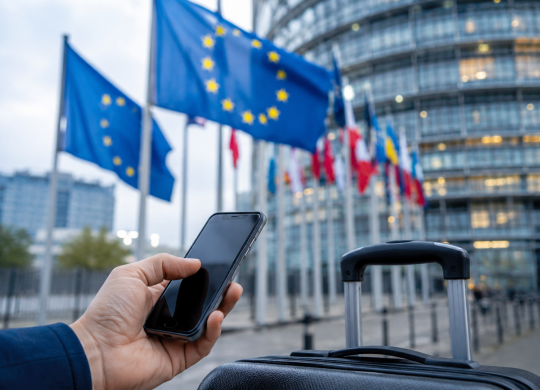
The European Union is preparing for a large-scale transition to digital documents on smartphones. In the coming years, residents and tourists in the EU will be able to use digital IDs and driver’s licenses through a single system called the European Digital Identity Wallet. Learn more about how the new digital documents will work and what will change for travelers in Europe

The European Union is gradually transitioning to a digital format for documents, which is set to transform how citizens are identified, how public services are accessed, and how identity is verified while traveling. As part of the European Digital Identity Wallet project, the EU plans to create a unified system of digital documents that will work across all member states. Users will be able to upload ID cards, driver’s licenses, medical records, and other official documents to the digital wallet. According to the European Commission, member states must ensure the launch of such digital wallets by the end of 2026.
At the same time, some countries are already testing their own digital documents. For example, in Spain, digital versions of ID cards and driver’s licenses are being actively developed through the government apps MiDNI and MiDGT. Simultaneously, the EU is strengthening the exchange of information between countries regarding traffic fines and driver checks, which will also become part of the new digital ecosystem. In the future, this could significantly change the rules of travel in Europe for both locals and tourists.
In our previous article, we discussed how to choose safe accommodation, avoid mistakes, and book a hotel without unnecessary expenses.
Planning a trip abroad and want to protect yourself from unforeseen situations?
Travel insurance from Visit World will cover medical expenses, flight delays, and lost luggage in any country. Get a policy online in a few minutes and travel with confidence!

What exactly will change after the launch of the EU digital wallet?
The European Digital Identity Wallet is set to become the single digital identification system for all EU countries. Essentially, it is an app where people can store official documents and verify their identity without paper copies or plastic cards.
The European Commission states that the system will operate in all EU countries and allow digital documents to be used both online and offline. The main goal is to simplify access to public and private services and make digital identification universally recognized across Europe.
The digital wallet is planned to contain:
- ID card or national ID
- Driver’s license
- Medical and insurance documents
- Bank details
- Diplomas and educational certificates
- Digital signatures
- Travel and registration documents
One of the key benefits will be the ability to use a digital ID in different EU countries without having to register separately in each country. For example, a person will be able to verify their identity when renting a car, checking into a hotel, opening a bank account, or accessing public services via a smartphone.
The European Commission also emphasizes that users themselves will control exactly which data is shared with services or institutions. For example, to verify age, the system will be able to show only that the person is of legal age without sharing their full date of birth or other personal data.
At the same time, the EU promises strict requirements for security and privacy protection. Technical standards for cybersecurity, encryption, and identity verification have already been approved for digital wallets, and these must be uniform across all EU countries.
In a previous article, we reported that as many as 11 European countries are temporarily reinstating checks at the internal borders of the Schengen Area.
Which countries are already implementing digital documents?
Although the unified EU system is still in the development phase, several European countries are already actively testing or using digital documents at the national level. These projects will form the basis for the future European Digital Identity Wallet.
Spain has become one of the most active participants in digitalization. The country already has the MiDGT government app, through which drivers can display a digital version of their driver’s license and vehicle registration. The document has the same legal validity as the plastic version during checks within Spain.
In addition, the Spanish government is developing the DNI electrónico digital ID system. It allows users to verify their identity online, sign official documents, and access government services without physical documents.
Similar solutions are already being tested in other European countries:
1. France is rolling out a digital ID card via the France Identité app;
2. Germany is expanding the capabilities of its eID;
3. Italy uses the SPID digital identification system;
4. Estonia remains one of Europe’s leaders in digital government services and electronic identification;
5. Denmark and the Netherlands are also actively integrating digital government services into mobile apps.
At the same time, the rules for using such documents currently vary by country. In most cases, digital IDs work only within a single country or for specific services. This is precisely why the EU is creating a unified system designed to ensure the mutual recognition of digital documents across all EU member states.
For tourists, this means that in the future, undergoing security checks, renting accommodation or a car, and interacting with government services could become significantly faster. However, a complete phase-out of plastic documents in Europe is not yet planned—during the transition period, digital and physical versions of documents will coexist.
We previously reported that the EU is introducing a single ticket for trains operated by different companies.
Driver’s licenses on smartphones and new rules for drivers in the EU
One of the main areas of digitalization in Europe will be the transition to digital driver’s licenses. In March 2025, the European Parliament and the Council of the EU agreed on new rules that provide for the creation of a single digital license for all EU countries. It is expected that they will be accessible through the European Digital Identity Wallet.
Digital licenses can be used during police checks, when renting a car, or when using car-sharing services. However, plastic licenses are not being phased out yet—drivers will be able to choose between the physical and digital formats.
The EU is paying special attention to the exchange of information about traffic violations between countries. While fines received by tourists or foreign drivers abroad often went unpunished in the past, enforcement is now gradually being tightened.
The new system will allow EU countries to more quickly exchange data on:
- Speeding;
- Running a red light;
- Driving under the influence;
- Using a phone while driving;
- Dangerous driving;
- Violations of parking rules and toll road regulations.
In practice, this means it will be harder for drivers to avoid liability for violations in another EU country. Notifications of fines and payment demands can be sent even after returning home.
For tourists and those who frequently travel by car in Europe, this also means the need to pay closer attention to local traffic rules. Different countries may have their own requirements regarding environmental zones, toll roads, parking, or mandatory equipment in the car, and digital data exchange makes enforcement significantly more effective.
In addition, digital documents can speed up roadside checks and simplify interactions with police or service providers. At the same time, experts advise keeping physical documents on hand for a while longer, especially during international travel, as the new system will be rolled out gradually across different EU countries.
In our previous article, we reported that Europe is suspending biometric checks due to issues with the EES system.
Will it be possible to completely do away with paper documents?
Despite active digitization, the EU does not yet plan to completely abolish physical documents. During the transition period, digital certificates and plastic cards will coexist, and citizens will be able to choose which format to use.
This is due to several reasons. First, not all EU countries have the same level of digital infrastructure. Second, authorities are taking into account the risks of technical glitches, lost phones, lack of internet access, or cybersecurity issues.
Experts also note that in the first few years after the system’s launch, there may be situations where certain government agencies or private companies do not yet support the new document format. This is particularly relevant for international travel, air travel, and border checks outside the EU.
That is why tourists and drivers are currently advised to:
1. Carry a physical passport or ID card;
2. Not rely solely on a smartphone while traveling;
3. Keep backup copies of documents;
4. Check whether the country recognizes digital documents;
5. Charge your phone before trips and when crossing the border.
A separate issue is the protection of personal data. The EU emphasizes that the digital wallet will operate on a voluntary basis: individuals will decide for themselves what data to display and to whom to grant access. Additionally, EU member states must comply with GDPR requirements and new cybersecurity standards.
No matter how well thought-out your itinerary is, there is always room for force majeure when traveling. Unexpected medical expenses, transportation delays, or problems with luggage can ruin your plans and budget. Travel insurance helps you avoid unnecessary worries in such situations. You can apply for a travel insurance policy for a specific trip online at Visit World - quickly and without unnecessary bureaucracy!
Take out a policy online at Visit World and enjoy your trip without any unnecessary worries!
We remind you! Popular European tourist destinations are becoming increasingly crowded, so travelers are looking for alternatives without the crowds. In 2026, attention is turning to countries that remain off the beaten path but offer unique experiences, affordable prices, and an authentic atmosphere. Read more about 5 European countries that are rarely visited by tourists.
Products from Visit World for a comfortable trip:
Travel guide for 200 countries;
Legal advice from a local specialist on visa and migration issues;
Travel insurance around the world (please select the country of interest and citizenship to receive services);
Medical insurance all over the world.
We monitor the accuracy and relevance of our information, so if you notice any errors or inconsistencies, please contact our hotline
Frequantly
asked questions
When might the EU officially launch digital documents on smartphones?
Will it be possible to travel across Europe with just a smartphone?
Which documents are planned to be converted to digital format?
Will digital licenses and IDs be recognized in all EU countries?
What will change for drivers after the digitization of documents?
Recommended articles
3 min
Transport
The European Union is preparing a major reform of rail travel: passengers will be able to purchase a single ticket even for routes involving multiple carriers. The new rules are also intended to strengthen the protection of travelers’ rights in the event of delays, cancellations, or missed connections. Find out how the single-ticket system will work in the EU and when the changes may take effect
14 May. 2026
More details3 min
Events
Who Won Eurovision 2026: Final Results, Best Performances and Biggest Contest Scandals
The Eurovision 2026 final was one of the most talked-about music shows of the year: the contest was memorable for its unexpected results, record-breaking viewer ratings and several high-profile scandals surrounding the voting. The winner received hundreds of points and managed to overtake the bookmakers’ main favourites in a tense battle that went down to the wire. Find out who won Eurovision 2026, which countries made it into the top 10, how many points the contestants received, and which moments from the final were the most talked-about in Europe
17 May. 2026
More details3 min
Transport
Europe is launching a new ICE high-speed international train that will connect six popular cities in Germany and Belgium. The route will begin service in the fall of 2026 and will allow tourists to travel quickly between Cologne, Aachen, Liège, Leuven, Brussels, and Antwerp without transfers. We’ll tell you how much tickets will cost, how long the trip will take, and why this route could become one of the most interesting options for traveling through Europe in 2026
18 May. 2026
More details3 min
Travels
Border Controls in the Schengen Area in 2026: Which Countries Check Documents at the Borders
In 2026, 11 European countries will temporarily reinstate border checks at the internal borders of the Schengen Area. These measures are in response to migration pressures, security threats, and major international events. Learn more about which countries have introduced border checks, where they are in effect, and how this will affect travel in Europe
19 May. 2026
More detailsAll materials and articles are owned by VisitWorld.Today and are protected by international intellectual property regulations. When using materials, approval from VisitWorld.Today is required.