

Europe's tallest volcano has erupted in Italy Mount Etna: A red alert has been issued for aviation
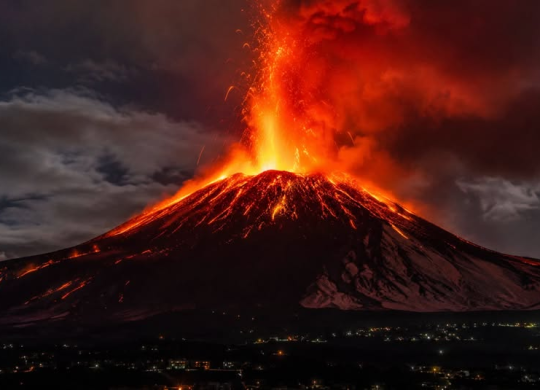
Mount Etna—Europe’s tallest and most active volcano—has become active again on the Italian island of Sicily. Due to large-scale ash emissions, a red alert has been issued for aviation, causing disruptions at Catania Airport and changes to flight schedules. Learn more about what’s happening on Mount Etna right now, whether there’s a threat to tourists, and how the eruption has affected air travel

Europe’s tallest and most active volcano has made its presence felt once again. On the Italian island of Sicily, Mount Etna has begun another powerful eruption, accompanied by streams of molten lava, thick clouds of volcanic ash, and continuous explosions.
Due to the dangerous ash emissions, a red alert has been issued for aviation, and operations at Catania Airport have been severely disrupted. At the same time, authorities emphasize that there is currently no immediate threat to populated areas; however, tourists are advised to closely monitor official announcements and the status of their flights.
In this article, we explain what happened on Etna, how the situation is developing, and what travelers planning a trip to Sicily should keep in mind.
In a previous article, we discussed new tourist taxes in Europe in 2026 and which countries will require tourists to pay more.
Planning a trip abroad and want to protect yourself from unforeseen situations?
Travel insurance from Visit World will cover medical expenses, flight delays, and lost luggage in any country. Get a policy online in a few minutes and travel with confidence!

Mount Etna Has Erupted Again: What We Know About the Eruption
The eruption of Mount Etna began with a sudden intensification of Strombolian activity in one of the volcano’s craters. Soon, a massive column of volcanic ash and gases rose into the sky, and bright orange lava flows began streaming down the mountain’s slopes. According to experts, the ash cloud reached several kilometers in height and was clearly visible dozens of kilometers from the volcano.
The Italian National Institute of Geophysics and Volcanology (INGV) reported that the sudden increase in activity was caused by a partial collapse of material from the southeastern crater. This resulted in a hot pyroclastic flow—a mixture of superheated gases, ash, and rock fragments—that rapidly moved down the volcano’s slope. At the same time, experts noted that the flow did not extend beyond the boundaries of the natural valley of Valle del Leone, which is located far from populated areas.
According to local authorities, there is currently no immediate threat to residents of nearby towns. However, hundreds of tourists who were on the slopes of Etna when the eruption began were forced to evacuate the dangerous area immediately. Videos quickly spread on social media showing people descending the mountain with a massive cloud of ash rising behind them.
Despite the striking footage, volcanologists emphasize that such episodes are typical for Etna. The volcano remains one of the most active in the world and regularly experiences periods of heightened activity, which are closely monitored using seismic stations, satellite monitoring, and observation systems.
Find out more about the new rules, dates and cost of visiting Venice by following the link.
Why was a red alert issued, and what does it mean?
Following the onset of intense eruptions, the Italian National Institute of Geophysics and Volcanology (INGV) raised the aviation hazard code (Volcano Observatory Notice for Aviation, VONA) to the red level. This decision is made when volcanic ash poses a serious threat to civil aviation.
Volcanic ash is dangerous to aircraft because fine, abrasive particles can damage engines, windshields, sensors, and other critical aircraft systems. That is why, even in the absence of a threat to the public, flights near the eruption area may be restricted or suspended entirely.
At the same time, it is important to understand that a red VONA alert does not mean a state of emergency has been declared for the residents of Sicily. It is used exclusively to inform aviation authorities of the high risk to flights due to the spread of volcanic ash.
According to volcanologists, the intensity of the eruption can change over the course of several hours or days, so the situation is constantly being monitored by experts. Experts are continuously monitoring seismic activity, the volume of ash emissions, the direction of its spread, and the behavior of lava flows in order to promptly inform authorities, airlines, and local residents of any changes.
We previously reported that Italy is introducing new rules for tourists in 2026.
How has the eruption affected tourists and air travel in Sicily?
Although populated areas are not currently at risk, the eruption of Etna has already impacted transportation and the island’s tourism infrastructure. The greatest disruptions have been experienced by airline passengers and tourists who had planned to climb the volcano.
The main consequences of the eruption:
- Catania International Airport has temporarily restricted operations due to a thick cloud of volcanic ash
- Some flights have been delayed, canceled, or rerouted to other airports in Sicily
- Tourists who were near the summit of Etna were quickly evacuated from the danger zone
- Local authorities closed off access to certain routes around the volcano
- Rescue and emergency services continue to monitor the situation around the clock
Videos showing hundreds of people quickly descending the slopes of Etna while a massive cloud of ash rises behind them have gone viral on social media. Despite the dramatic footage, there have been no reports of casualties or a large-scale evacuation of the population so far.
We previously reported that Italy will reimburse drivers for traffic jams on toll roads in 2026.
What advice is there for travelers planning a trip to Sicily?
Etna’s activity can change very quickly, so tourists planning to visit Sicily in the near future should check for the latest information in advance. Although most of the island’s resorts and tourist attractions are operating as usual, certain restrictions may be in place near the volcano and could affect air travel.
Before traveling, experts recommend:
1. Check your flight status on the airline’s website or the Catania Airport website;
2. Monitor announcements from the Italian Civil Protection Agency and local authorities;
3. Refrain from independent hikes to the craters or closed trails;
4. Book tours to Etna only through licensed operators who comply with current restrictions;
5. Purchase travel insurance that covers unforeseen expenses in the event of a flight delay or trip cancellation.
Volcanologists emphasize that Etna is one of the best-monitored volcanoes in the world. Its activity is constantly tracked using modern monitoring systems, so if the situation changes, local authorities promptly update their recommendations for residents and tourists. That is why travelers should rely only on official announcements, rather than on videos or rumors on social media.
No matter how well thought-out your itinerary is, there is always room for force majeure when traveling. Unexpected medical expenses, transportation delays, or problems with luggage can ruin your plans and budget. Travel insurance helps you avoid unnecessary worries in such situations. You can apply for a travel insurance policy for a specific trip online at Visit World - quickly and without unnecessary bureaucracy!
Take out a policy online at Visit World and enjoy your trip without any unnecessary worries!
We remind you! Some countries are island states with political neutrality, which means that the likelihood of military conflict is quite low. Read more about the countries that are likely to participate in World War III and the top safest countries in the world.
Products from Visit World for a comfortable trip:
Travel guide for 200 countries;
Legal advice from a local specialist on visa and migration issues;
Travel insurance around the world (please select the country of interest and citizenship to receive services);
Medical insurance all over the world.
We monitor the accuracy and relevance of our information, so if you notice any errors or inconsistencies, please contact our hotline
Frequantly
asked questions
Why is Mount Etna considered the most active volcano in Europe?
Is it safe to travel to Sicily right now?
What does a red alert mean during an eruption of Mount Etna?
Can a flight be canceled due to a volcanic eruption?
What should tourists do if a volcanic eruption begins while they are on vacation?
Recommended articles
3 min
Travels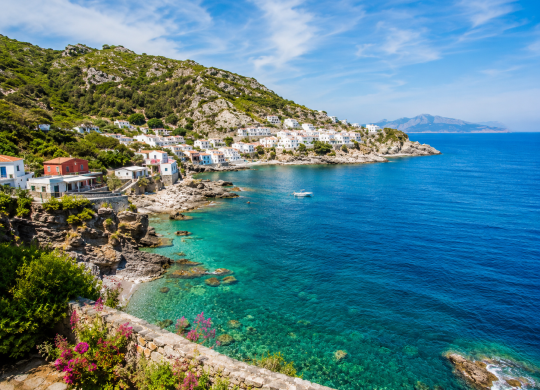
Italy is not just the crowded resorts of the Amalfi Coast or the expensive Capri. The country still has islands where you can experience a genuine Mediterranean atmosphere, tranquil coves, fishing villages and a traditional way of life, free from mass tourism. Find out more about 5 authentic Italian islands worth visiting in 2026
17 May. 2026
More details2 min
Popular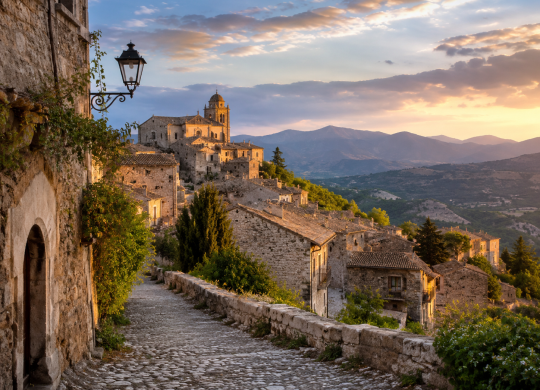
Italy Offers Nearly Free Housing and Jobs: How to Move to a Charming Italian Village
A small village in Italy is inviting new residents and is ready to offer housing for a nominal fee, financial support, and assistance with starting a business. However, to participate, you must meet a number of requirements and pass a selection process. Find out exactly what the program offers, who is eligible to apply, and how to prepare for the move
02 Jun. 2026
More details2 min
Travels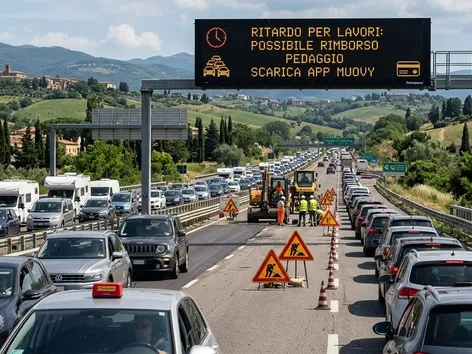
Italy Introduces Toll Refunds for Traffic Jams in 2026: Who Can Claim Compensation
Italy has introduced a new compensation system for drivers who have lost time in traffic jams on toll motorways due to roadworks. Find out who is entitled to a refund, what amounts can be received and how to apply for a refund correctly
08 Jun. 2026
More details2 min
Travels
Venice Plans to Raise Tourist Entry Fee to €50: What Will Change in 2026?
Venice authorities are considering a significant increase in entry fees for day-trippers. If the initiative is approved, visiting one of Europe’s most popular cities could cost up to €50 on certain days. Learn more about who will be affected by the new rules, why the city is taking this step, and what to keep in mind when planning your trip
24 Jun. 2026
More detailsAll materials and articles are owned by VisitWorld.Today and are protected by international intellectual property regulations. When using materials, approval from VisitWorld.Today is required.