

Temporary Residence Permits in Germany for Refugees in 2026: From §25 of the Residence Act to a Permanent Residence Permit
Table of contents
- What categories of protection are available for refugees in Germany?
- Niederlassungserlaubnis: What does a permanent residence permit entail?
- How many years must refugees wait to obtain a Niederlassungserlaubnis?
- Requirements for obtaining a permanent residence permit after 5 years in Germany
- What is required to obtain a Niederlassungserlaubnis after 3 years in Germany?
- What is important to consider after receiving a permanent residence permit?
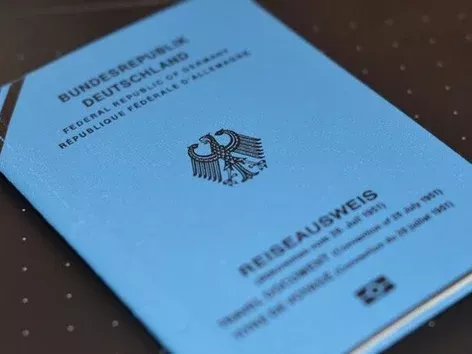
Refugees in Germany who have been granted protection status under §25 of the Residence Act (AufenthG) are entitled, after a period specified by law, to apply for a permanent residence permit (Niederlassungserlaubnis). The conditions and timeframes depend on the category of protection—recognized refugees can apply for this status after three years, while other categories can apply after five years. Learn more about the requirements, necessary documents, and the cost of applying for a Niederlassungserlaubnis in 2026

Germany remains one of the key EU countries that provides protection to refugees and guarantees them a path to permanent residence clearly defined in law. A residence permit under §25 of the Residence Act (Aufenthaltsgesetz, AufenthG) serves as the starting point for individuals who have been granted international protection in Germany. After a period specified by law—three or five years—these individuals are entitled to apply for a permanent residence permit (Niederlassungserlaubnis).
Who exactly is eligible for this status, what requirements must be met, and how do the conditions differ for various categories of protection—we’ll explain all of this in the article below.
Need help applying for a permanent residence permit in Germany?
An immigration lawyer from the Visit World portal will analyze your situation, help you gather the necessary documents, and guide you through the application process with the Ausländerbehörde.

What categories of protection are available for refugees in Germany?
German law distinguishes between several forms of protection, each of which grants the right to a residence permit in accordance with §25 of the Residence Act (AufenthG). The category of protection is determined by the Federal Office for Migration and Refugees (Bundesamt für Migration und Flüchtlinge, BAMF) based on the results of the asylum application review.
Main forms of protection:
- Right to asylum (Asylberechtigung) — granted to individuals persecuted by the state for political reasons in accordance with Article 16a of the German Basic Law. A residence permit is issued pursuant to §25(1) of the Residence Act (AufenthG) for a period of three years.
- Refugee status (Flüchtlingseigenschaft)—recognized in accordance with §3 of the Asylum Act (AsylG) and the 1951 Geneva Convention. A residence permit is issued pursuant to §25(2), sentence 1, alternative 1 of the Residence Act (AufenthG), also for a period of three years.
- Subsidiary protection (subsidiärer Schutz) applies to persons who face serious harm in their country of origin: the death penalty, torture, inhuman treatment, or a threat to life resulting from an armed conflict. A residence permit is issued pursuant to §25, para. 2, sentence 1, alt. 2 of the AufenthG initially for one year, with a subsequent extension for three years.
- National ban on deportation (nationales Abschiebungsverbot) — applies in accordance with §60, para. 5 or 7 of the AufenthG. A residence permit is issued in accordance with §25, para. 3 of the AufenthG for a period of one year, with the possibility of renewal.
The specific form of protection a person has received determines the path to a permanent residence permit—both in terms of duration and requirements.
How much will housing cost in Germany in 2026?— We explain it here.
Niederlassungserlaubnis: What does a permanent residence permit entail?
A permanent residence permit (Niederlassungserlaubnis) is a residence permit in Germany with no time limit. Unlike a standard residence permit (Aufenthaltserlaubnis), which must be renewed regularly, the Niederlassungserlaubnis is valid indefinitely.
The holder of this permit receives:
- the right to live anywhere in Germany without restrictions on place of residence (the Wohnsitzauflage is waived);
- the right to engage in any type of employment—whether as an employee or an entrepreneur—without additional permits;
- simplified conditions for family reunification;
- a stable legal basis for subsequently obtaining German citizenship.
Physically, the Niederlassungserlaubnis is issued as an electronic ID card (eAT) valid for ten years. Once the card expires, a new one must be ordered; however, the right of residence itself remains indefinite.
Visit World services for tourists, migrants, and expats: Insurance | Guides | Legal advice
How many years must refugees wait to obtain a Niederlassungserlaubnis?
The timeframes and conditions for obtaining a permanent residence permit are defined by §26 of the Residence Act (AufenthG) and depend on the category of protection.
For persons with the right to asylum and recognized refugees (§25(1) and §25(2) alt. 1 of the Residence Act), §26(3) of the Residence Act applies with preferential conditions:
- the standard period is 5 years with a residence permit; the time spent in the asylum procedure (Asylverfahren) is counted toward this period;
- the accelerated period is 3 years, provided that enhanced integration requirements are met.
For persons with subsidiary protection (§25, para. 2, alt. 2 of the AufenthG) and a national ban on deportation (§25, para. 3 of the AufenthG), §26, para. 4 of the AufenthG applies. No preferential periods are provided for these categories—the general minimum period is 5 years with a residence permit. All requirements of §9(2) of the AufenthG must be fully met.
How to obtain permanent residence and resident status in Germany in 2026— follow the link to read more.
Requirements for obtaining a permanent residence permit after 5 years in Germany
Individuals who have been in Germany for five years with a residence permit under §25 of the AufenthG must meet the general criteria of §9(2) of the AufenthG.
List of key requirements:
- holding a residence permit for at least five years (the duration of the asylum procedure counts toward this period);
- the ability to support oneself and one’s family members without receiving social benefits (Bürgergeld, Sozialhilfe); a spouse’s income is also taken into account;
- payment of at least 60 monthly contributions to the statutory pension insurance system (gesetzliche Rentenversicherung); For recognized refugees and persons entitled to asylum, this requirement does not apply pursuant to §26(3) of the Residence Act (AufenthG);
- proof of German language proficiency at a level of at least A2 (under the standard five-year period) or B1 (under the accelerated procedure after three years);
- basic knowledge of the legal and social systems of the Federal Republic of Germany, demonstrated by the “Leben in Deutschland” test or the successful completion of an integration course;
- no threat to public safety and law and order (no criminal record);
- health insurance (mandatory or equivalent private coverage);
- sufficient living space—at least 9 m² per adult and 6 m² per child.
Certain requirements may be waived in cases of physical or mental illness or disability—provided a specialized medical opinion is available. An exception is also made for individuals who have reached retirement age and have held a residence permit for at least five years.
What is required to obtain a Niederlassungserlaubnis after 3 years in Germany?
The expedited procedure after three years is available exclusively to recognized refugees and persons entitled to asylum (§26, para. 3, item 3 of the Residence Act (AufenthG)). Higher requirements apply to them:
- holding a residence permit for at least three years (the duration of the asylum procedure counts toward this period);
- knowledge of the German language at the C1 level;
- full financial self-sufficiency without any social benefits;
- proof of knowledge of the legal and social systems of Germany;
- no notification from the BAMF regarding grounds for revocation or withdrawal of protection status.
This option encourages accelerated integration: a person who has mastered the language to a C1 level within three years, is financially independent, and has no issues with security authorities can obtain stable legal status much sooner.
Where to look for a job in Germany without knowing the language— we explain here.
What documents are required to submit an application?
An application for a permanent residence permit is submitted to the Foreigners’ Registration Office (Ausländerbehörde) at the place of registration. In some federal states, particularly in Berlin, the application can be submitted online. The application must be submitted before the current residence permit expires.
The standard list of documents includes:
- a completed and signed application form (Antrag auf Erteilung einer Niederlassungserlaubnis);
- a valid passport or a substitute travel document (Reiseausweis für Flüchtlinge);
- a recent biometric photo;
- a valid residence permit;
- the BAMF decision granting protection status;
- proof of income: an employment contract, pay stubs for the last three months, and tax documents;
- proof of pension contributions (Rentenversicherungsverlauf)—for categories subject to this requirement;
- language proficiency certificate (Goethe-Zertifikat, telc, or certificate of completion of an integration course);
- certificate of passing the “Leben in Deutschland” test or a certificate of completion of an integration course;
- proof of health insurance;
- a rental agreement specifying the living space and rent amount.
The list may vary depending on the specific federal state and the applicant’s circumstances, so it is recommended to check the complete list in advance with the local Ausländerbehörde.
What is the EU Blue Card in Germany 2026 — find out more at the link.
How much does it cost to apply for a Niederlassungserlaubnis?
According to §45 of the Verordnung zur Durchführung des AufenthG (AufenthV), the administrative fee for issuing a permanent residence permit ranges from 113 to 147 euros, depending on the grounds for issuance and the applicant’s category. For minors, the fee is 55 euros.
According to §52(3) of the AufenthV, recognized refugees, persons entitled to asylum, and persons under international protection may be exempt from paying the fee. Persons receiving social assistance under SGB II, SGB XII, or the Asylum Seekers Assistance Act (AsylbLG) are also exempt from payment, in accordance with §53 of the AufenthV.
Additional costs may arise for a language certificate (150–260 euros), the “Leben in Deutschland” test (approximately 25 euros), and notarized translations of documents.
What is important to consider after receiving a permanent residence permit?
Obtaining a Niederlassungserlaubnis provides stable legal status, but there are restrictions you should be aware of in advance.
First, according to §51(1) of the Residence Act (AufenthG), the residence permit expires if the holder is absent from Germany for more than six consecutive months or moves to another country. An exception applies to recognized refugees with a valid travel document (§51(7) AufenthG).
Second, travel to the country of origin for individuals with recognized refugee status or the right to asylum may lead to a review of the grounds for their protection status and, under certain circumstances, to its revocation. Pursuant to §47b of the AufenthG, as of October 2024, there is an obligation to notify the authorities of such trips.
Third, a permanent residence permit is a prerequisite for subsequent naturalization: starting in 2024, German citizenship can be obtained after five years of legal residence (or after three years, provided there are exceptional integration achievements).
German immigration law undergoes regular changes—in 2025–2026, a series of amendments to the AufenthG were adopted that affected the conditions of stay and procedures for refugees. To accurately assess your chances of obtaining a permanent residence permit and avoid mistakes when submitting your application, it’s advisable to seek the assistance of a qualified specialist. The Visit World portal offers consultations with an immigration lawyer who can help you navigate the current requirements of German law and prepare your documents tailored to your individual situation.
Book a consultation and get a clear action plan for your case!
Reminder! We discuss basic old-age benefits in Germany in 2026 in this article.
Products from Visit World for a comfortable trip:
Checklist for obtaining a visa and necessary documents in Germany;
Legal advice on business issues in Germany;
Travel insurance for foreigners in Germany;
Medical insurance around the world.
We monitor the accuracy and relevance of our information, so if you notice any errors or inconsistencies, please contact our hotline.
Frequantly
asked questions
Can refugees obtain a residence permit in Germany?
How many years must a refugee wait to obtain a Niederlassungserlaubnis in Germany?
Recommended articles
3 min
Work
Berlin remains one of the few major cities in Germany where foreigners can find work even without knowing German. The most English-speaking job openings are offered by IT companies, startups, the fintech sector, and international delivery services. Learn more about which sectors in Berlin make it easiest to find a job without German, which companies actively hire foreigners, and where to look for current job openings
20 May. 2026
More details2 min
For refugees
Basic Old-Age Security in Germany in 2026: Who Is Eligible, Benefit Amounts, and How to Apply
Germany’s social security system provides financial support to people who do not have sufficient income to cover their basic needs. In 2026, the amount of this assistance and the eligibility requirements will have specific features. Learn more about basic old-age security in Germany, the amount of benefits, and the application process
01 Jun. 2026
More details2 min
Residence permit
How to Obtain Permanent Residency and Resident Status in Germany in 2026: A Detailed Guide
Obtaining a permanent residence permit in Germany involves meeting a number of strict requirements regarding length of stay, income and language level. Find out what the conditions are in force in 2026, which categories of migrants can receive a permanent residence permit under simplified conditions and how to apply
21 Jun. 2026
More details2 min
Popular
Despite the high interest rates of recent years, the German real estate market is gradually recovering, and housing prices are on the rise again. At the same time, the price per square meter varies significantly depending on the federal state: in some regions, it exceeds €5,000, while in others it remains below €1,500. Learn more about current housing prices in Germany, the most expensive and most affordable regions, as well as the latest real estate market trends
25 Jun. 2026
More detailsAll materials and articles are owned by VisitWorld.Today and are protected by international intellectual property regulations. When using materials, approval from VisitWorld.Today is required.