

The United Kingdom May Return to the EU: What We Know
Table of contents
- The United Kingdom May Rejoin the EU: What Happened
- Brexit: Why the UK Left the EU and What Has Changed
- Why is the UK talking about returning to the EU again?
- How can the United Kingdom rejoin the European Union?
- Will the UK return to the EU, and what would that change?
- What’s Next: When the UK Might Make a Decision on the EU
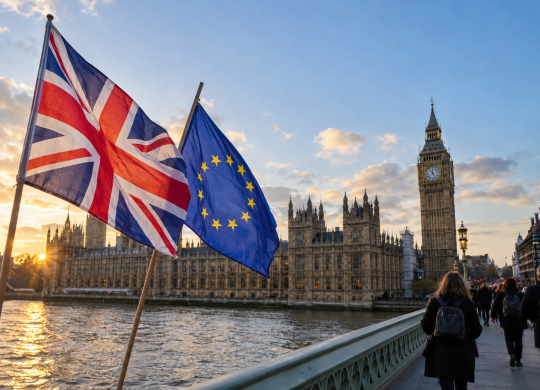
For the first time in years since Brexit, the United Kingdom is seriously discussing the possibility of a new rapprochement with the European Union—even going so far as to consider a full return to the bloc. Prime Minister Andy Burnham stated that the government will consider various scenarios for future relations with the EU. Learn more about how realistic the UK’s re-entry into the EU is and what it would take

The question of Great Britain’s return to the European Union has once again become part of the official political debate. Prime Minister Andy Burnham stated that the country should consider the full range of possible formats for relations with the EU: from closer economic integration to full re-entry. According to him, Brexit has done more harm than good to the United Kingdom. At the same time, the government has not yet made a decision on rejoining the EU nor announced a new referendum. The discussion centers on revising the country’s long-term strategy following Brexit.
Planning a trip abroad?
Insurance from the Visit World portal will help you avoid unnecessary risks. The policy covers the costs of medical treatment, emergency assistance, and unforeseen situations abroad, so that even in the event of delays or route changes, you remain protected and can focus on your trip rather than on problems.

The United Kingdom May Rejoin the EU: What Happened
British Prime Minister Andy Burnham stated that the country needs to reassess its long-term relationship with the European Union. Among the possible scenarios, he mentioned maintaining the current model, joining the customs union or the single market, as well as the UK’s full return to the EU.
Burnham emphasized that, in his view, Brexit has done the country more harm than good, particularly for the economy. At the same time, he did not announce a course toward immediate re-membership. The government must assess the advantages, disadvantages, and practical feasibility of each scenario.
The current discussion marks a notable shift in British policy toward the EU. The previous government led by Keir Starmer had promised to remain outside the European Union, the single market, and the customs union. Burnham is also adhering to these commitments for now, but he has openly acknowledged that this approach could be revised after the next election. The next parliamentary election is scheduled to take place no later than mid-2029.
There is also no specific decision regarding a new referendum. The prime minister stated that no vote is planned in the near future, though he did not rule out such a scenario entirely. The issue of future relations with the EU is expected to be one of the topics at the next UK-EU summit.
In a previous article, we reported that the UK has resumed its refugee program.
Brexit: Why the UK Left the EU and What Has Changed
Brexit was the result of the June 23, 2016, referendum. 51.9% of voters voted to leave the European Union, while 48.1% voted to remain. Voter turnout was 72.2%, and the “Leave” camp won by a margin of approximately 1.27 million votes.
Formally, the UK left the EU on January 31, 2020. A transition period remained in effect until December 31 of that year, during which the country was still subject to key EU rules. As of January 1, 2021, the UK finally left the single market and the customs union, and trade relations began to be governed by a separate Trade and Cooperation Agreement.
Brexit has affected several areas at once. The freedom of movement between the United Kingdom and the EU has ended; British immigration rules now apply to new migrants; and companies have faced additional customs and administrative procedures when trading with Europe.
The economic consequences remain one of the main points of contention in the current debate.
In its forecast, the UK’s Office for Budget Responsibility continues to estimate that the post-Brexit model of trade with the EU could, in the long term, reduce the UK’s productivity by approximately 4% compared to a scenario in which the UK remained an EU member. The agency cites, first and foremost, the rise in non-tariff barriers in UK-EU trade as the reason.
That is precisely why Brexit has once again found itself at the center of political debate. The issue is no longer just about assessing the 2016 decision, but also about what the model for the UK’s relationship with the EU should look like in the coming years.
Learn more about the best cities in the UK for expats to live in by following the link.
Why is the UK talking about returning to the EU again?
The main reason is an increasingly critical assessment of the consequences of Brexit. Andy Burnham has stated outright that leaving the EU has done more harm than good to the UK, particularly in terms of the economy, trade, and immigration policy. That is why the government wants to rethink the model of its relationship with the EU as part of a long-term development plan for the country.
The economic factor remains one of the key considerations. According to estimates by the UK’s Office for Budget Responsibility, the current post-Brexit model of trade with the EU could, in the long term, reduce the country’s productivity by approximately 4% and trade intensity by approximately 15% compared to a scenario in which the UK remained an EU member.
Public sentiment in the UK has also shifted. According to YouGov, in June 2026, 55% of UK residents supported rejoining the EU. However, support dropped to 35% if rejoining meant giving up the UK’s previous exemptions, particularly regarding the euro and the Schengen Area. The public is becoming increasingly open to the very idea of rejoining, but the specific terms of potential membership remain a matter of principle.
Political rhetoric has also become noticeably softer. While the main issue after Brexit was implementing the 2016 referendum result, London is now openly discussing several models for rapprochement with Europe: a customs union, the single market, or full EU membership. Burnham emphasizes that none of these options has been chosen yet.
We previously reported that the leaders of Scotland, Wales, and Northern Ireland are drafting a memorandum on self-determination.
How can the United Kingdom rejoin the European Union?
The United Kingdom can no longer rejoin the EU simply by reversing Brexit. After leaving the Union, the country lost its status as a member state, so to rejoin, it will have to go through the procedure set forth in Article 49 of the Treaty on European Union.
The process involves several key stages:
1. The UK submits an official application for membership
2. The European Commission assesses the country’s compliance with the conditions for accession
3. All 27 EU member states must unanimously agree to the admission
4. The European Parliament must give its consent
5. The accession treaty must be ratified by the United Kingdom and all EU member states
One of the main uncertainties concerns the terms of a possible return. Prior to Brexit, the United Kingdom had a number of special exemptions; in particular, it was not part of the eurozone or the Schengen Area. Article 49 does not provide for the automatic restoration of these privileges—the terms of new membership would be determined during negotiations.
French President Emmanuel Macron has already stated that he is open to the UK’s potential return, but emphasized that this does not mean cherry-picking specific benefits of membership. Spanish Prime Minister Pedro Sánchez has also publicly supported the possibility of the UK rejoining the EU.
Learn more about the new rules for obtaining UK work visas for foreign nationals by following the link.
Will the UK return to the EU, and what would that change?
As of October 2026, the UK has not applied for EU membership, has not scheduled a new referendum, and has not approved an official plan for rejoining. For now, the focus is on political discussions regarding possible formats for future relations with the European Union.
Even if London opts for full membership, the process will take years. The UK will have to submit a new application, undergo negotiations, and obtain the consent of all 27 EU member states. The terms of membership will be determined separately, including issues related to the euro, the Schengen Area, contributions to the EU budget, and participation in common policies.
If the UK were to rejoin the EU, the biggest changes could concern:
- The rights of EU citizens to live and work in the UK, and vice versa
- Simplifying trade and reducing some customs barriers
- Access for British businesses to the single market
- Rules governing education, mobility, and employment
- Coordination of migration, economic, and regulatory policies
However, there will be no automatic return to the rules that were in place before Brexit. The terms of new membership will be determined separately, and these terms may become the main focus of negotiations between London and Brussels.
What’s Next: When the UK Might Make a Decision on the EU
The next major event is the second UK–EU summit, scheduled to take place in Brussels later in 2026. The European Council has already confirmed that London and Brussels plan to use it to further deepen their relationship.
Andy Burnham stated that ahead of the summit, the government will evaluate various options for cooperation with the EU and attempt to identify a model around which a political consensus can be built. These include a customs union, the single market, a separate in-depth agreement, or full membership.
The parties also face practical issues regarding a more comprehensive overhaul of their relationship. In particular, negotiations are ongoing to streamline trade in food and agricultural products, harmonize emissions trading systems, and coordinate youth mobility programs. Progress in these areas could serve as the first indicator of how far London and Brussels are willing to go in their new rapprochement.
A quick decision on a full return to the EU is not to be expected. Burnham links the broader choice of a future relationship model to the country’s long-term strategy, and the next parliamentary elections are scheduled to take place no later than 2029.
Are you preparing for a trip abroad in 2026?
Medical insurance from the Visit World portal will provide reliable support during your trip, especially in the context of flight changes and unstable schedules. The policy covers medical expenses, emergency assistance, and other unforeseen situations outside the country, so you can feel confident even when plans have to be adjusted at the last minute.
We remind you! Renting a home in the EU varies greatly from country to country. Read more about where apartments are most affordable, where they’re hard to find, and what’s changing in 2026.
Products from Visit World for a comfortable trip:
Travel guide for 200 countries;
Legal advice from a local specialist on visa and migration issues;
Travel insurance around the world (please select the country of interest and citizenship to receive services);
Medical insurance all over the world.
We monitor the accuracy and relevance of our information, so if you notice any errors or inconsistencies, please contact our hotline
Frequantly
asked questions
Did the United Kingdom rejoin the EU in 2026?
Will there be a new referendum on the UK’s accession to the EU?
When might the UK rejoin the EU?
Recommended articles
2 min
Employment
UK Work Visas: New Rules for Foreign Nationals
The United Kingdom is revising its work visa system for foreign professionals. The changes will affect a number of visa categories. Learn more about the new rules
08 Sep. 2026
More details3 min
Popular
The Breakup of Great Britain: What Is Known About the Referendums?
Leaders from Scotland, Wales, and Northern Ireland are drafting a memorandum on self-determination. Learn more about the possible breakup of the United Kingdom
15 Sep. 2026
More details3 min
Expats
The Best Cities in the United Kingdom for Expats to Live In
A high salary in the United Kingdom doesn’t always mean more disposable income. The difference in rent prices between London and regional centers can eat into your income advantage. Learn more about the best cities in the UK for work, family life, and long-term relocation
28 Sep. 2026
More details3 min
For refugees
The United Kingdom Has Resumed Its Refugee Program: Who Will Be Eligible to Relocate
The United Kingdom has resumed accepting new applications under the UK Resettlement Scheme and is preparing three additional pathways for refugees through communities, universities, and employers. Here’s who will be eligible for these programs, how the selection process will work, and when the first arrivals are expected
02 Oct. 2026
More detailsAll materials and articles are owned by VisitWorld.Today and are protected by international intellectual property regulations. When using materials, approval from VisitWorld.Today is required.