

New Rules for Renting Housing in Poland: What Requirements Must Apartment Owners Meet?
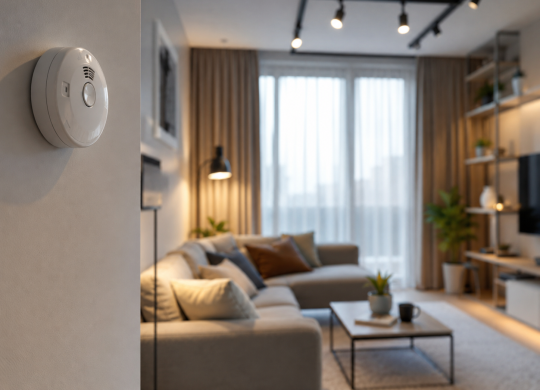
New requirements have taken effect in Poland for property owners who rent out apartments, condos, or rooms on a short-term basis. From now on, landlords must install special safety sensors, and violations of the rules can result in a fine of up to 30,000 zlotys. Find out who is affected by these changes, what requirements must be met, and how to avoid liability

As of June 30, 2026, new fire safety regulations for owners of short-term rental properties came into effect in Poland. These regulations apply not only to hotels and guesthouses but also to private landlords who list their apartments or rooms on platforms such as Airbnb or Booking.com. The main goal of the changes is to improve safety for tourists and reduce the risk of fires and carbon monoxide poisoning.
The new requirements mandate the installation of standalone smoke detectors and, in certain cases, carbon monoxide detectors as well. Significant penalties are in place for non-compliance: ranging from a fine of up to 5,000 zlotys to a court-imposed penalty of up to 30,000 zlotys (nearly 7,500–8,000 U.S. dollars, depending on the exchange rate), as well as other liability measures. Additionally, violations may affect a landlord’s ability to receive insurance compensation in the event of an emergency.
In the previous article, we reported on the most expensive cities in the world to live in in 2026, according to Numbeo.
Are you planning to buy real estate abroad? Before concluding a deal, it is important to consider not only the price per square meter, but also tax liabilities, restrictions for foreigners, title checks, and additional costs. Visit World's real estate lawyers will help you analyze the property, assess legal risks, and accompany you at all stages of the transaction: from the initial consultation to the signing of the contract. Get professional support and confidence in every step.

New Rules for Landlords in Poland: What Has Changed as of June 30, 2026
As of June 30, 2026, new fire safety requirements for properties used for short-term stays came into effect in Poland. These are aimed at improving safety for tourists and residents, as well as reducing the number of fires and carbon monoxide poisoning incidents. The new regulations are mandatory for anyone renting out short-term accommodations, regardless of whether the owner operates as a private individual or through a business.
First and foremost, the changes apply to apartments, condos, and rooms rented by the day or for several days through popular booking services, such as Airbnb and Booking.com. While many private landlords were previously exempt from such strict requirements, uniform safety standards have now been established for them, similar to those that have long been in place for certain types of tourist accommodations.
One of the main new requirements is the mandatory installation of standalone smoke detectors. If the premises contain equipment that runs on gas, liquid, or solid fuel (such as a gas boiler, water heater, or fireplace), the owner is also required to install a carbon monoxide detector. However, a separate smoke detector is not required if the building is already equipped with a stationary fire alarm system or an automatic fire suppression system.
The new requirements apply not only to new accommodations. For existing apartments and units rented to tourists, there is also an obligation to bring the living space into compliance with the regulations. However, owners of private homes and apartments who use the property exclusively for their own residence must install the detectors only by January 1, 2030.
In addition to the mere installation of the equipment, the law also sets requirements for its quality. The detectors must comply with current Polish technical standards; therefore, using the cheapest devices without the necessary certification may be considered a violation of the law.
In our previous article, we reported that Spain has been named the best country for real estate investment in Europe for the first time.
Who is affected by the new requirements?
The new rules cover a much wider range of property owners than might appear at first glance. They apply not only to hotels or guesthouses but also to private individuals who rent out accommodations to tourists on a short-term basis through online platforms or independently. The goal of these changes is to establish uniform safety standards for all lodging facilities, regardless of ownership status.
The new requirements apply to:
- Apartments rented on a daily basis
- Tourist apartments
- Individual rooms offered for short-term rent
- Vacation homes
- Other properties used as temporary accommodations for guests
In practice, this means that the rules also apply to homeowners who rent out their properties through popular booking services, such as Airbnb, Booking.com, and similar platforms. If a property is used for short-term tourist stays, it must comply with the new fire safety standards regardless of the number of bookings throughout the year.
At the same time, the law provides an exception for ordinary residential buildings and apartments that are not used for commercial rentals. If the owner lives in their home permanently and does not rent it out to tourists, smoke detectors must be installed only as of January 1, 2030. Thus, the government has granted a multi-year transition period for private households, while the short-term rental sector must comply with the new requirements immediately.
The introduction of uniform rules for all market participants is part of broader changes aimed at increasing transparency in Poland’s tourism sector. The authorities are gradually tightening controls on short-term rentals to ensure safe living conditions for guests and uniform requirements for all property owners.
In our previous article, we discussed where apartment prices are rising the fastest, how much housing costs in different cities across Hungary, and what to expect from the market.
What fines are imposed for violating the new rules?
Polish authorities emphasize that the new requirements are mandatory. If an inspection reveals that a property owner has failed to comply with established fire safety standards, they may face not only administrative sanctions but also criminal liability.
The severity of the penalty depends on the nature of the violation and the decision of the competent authorities. The law provides for:
- A fine of up to 5,000 Polish zlotys as part of administrative proceedings
- If the case is referred to court—a fine of up to 30,000 zlotys (approximately 7,000–8,000 U.S. dollars or 6,500–7,000 euros, depending on the current exchange rate)
- The possibility of other liability measures being applied in accordance with Polish law
At the same time, financial sanctions are not the only risk for landlords. If the required detectors are not installed in the property, serious issues with the insurance company may arise in the event of a fire or carbon monoxide poisoning. The absence of necessary safety measures may serve as grounds for reducing or even denying insurance compensation if a violation of the established requirements is proven.
Polish authorities are urging property owners not to delay compliance with the new regulations. The cost of standalone smoke and carbon monoxide detectors is incomparably lower than potential fines or damages, and most importantly, these devices can provide timely warnings of danger and save the lives of residents and guests. In countries where such systems have long been mandatory, the mortality rate from fires and carbon monoxide poisoning is significantly lower.
We previously covered the most expensive EU capitals for renting in 2026.
What do landlords need to do to avoid fines?
Property owners who rent out apartments, condos, or rooms on a short-term basis should not wait for inspections. If a property falls under the new requirements, it must be brought into compliance with current fire safety regulations. This will not only help avoid substantial fines but also increase the level of protection for guests and the property itself.
Before starting or continuing to rent out a property, it’s important to take several mandatory steps:
- Install a standalone smoke detector in the unit if one isn’t already present
- Install a carbon monoxide detector if the apartment or house uses a gas boiler, water heater, fireplace, stove, or other equipment that runs on gas, liquid, or solid fuel
- Ensure that the devices comply with Polish technical standards and are properly installed in accordance with the manufacturer’s recommendations
- Regularly check the detectors’ functionality and promptly replace the batteries or the devices themselves once their service life has expired
Special attention should be paid to properties listed on Airbnb, Booking.com, and other booking platforms. The mere fact that an apartment is rented to tourists only a few times a year does not exempt the owner from complying with the new requirements. If a property is used for short-term rentals, it must meet established safety standards.
The introduction of these new rules is part of Poland’s overall policy to improve the safety of its housing stock. According to the Polish Fire Service, several hundred people die in fires in the country each year, and the timely activation of smoke and carbon monoxide detectors significantly increases the chances of a safe evacuation. That is why the authorities are gradually making such devices mandatory for an increasing number of buildings.
Buying a home in another country is not only an investment but also a serious legal procedure. Mistakes in documents, unaccounted taxes or restrictions for foreigners can lead to financial losses. Consultation with a real estate lawyer from Visit World will help you to safely complete the transaction, check the seller and avoid hidden risks. Contact the experts to make your real estate purchase abroad as transparent and secure as possible.
We remind you! The Cypriot parliament is considering draft laws that could significantly change the conditions for buying real estate for citizens of countries outside the European Union. The initiatives include quantitative limits on properties, geographical bans and transparency requirements for transactions. Read more about the proposed restrictions, foreign purchases statistics and how to prepare for possible changes in the Cyprus real estate market.
Products from Visit World for a comfortable trip:
Travel guide for 200 countries;
Legal advice from a local specialist on visa and migration issues;
Travel insurance around the world (please select the country of interest and citizenship to receive services);
Medical insurance all over the world.
We monitor the accuracy and relevance of our information, so if you notice any errors or inconsistencies, please contact our hotline.
Frequantly
asked questions
Do the new rules apply only to hotels?
What types of smoke detectors must be installed?
What penalties apply for failure to comply with the new requirements?
By when must the new requirements be met?
Why has Poland introduced new fire safety regulations?
Recommended articles
2 min
Work
Demand for temporary workers has surged in Poland: who are employers looking for in 2026?
Polish employers are increasingly turning to temporary hiring. The highest demand is currently seen in logistics, warehousing, manufacturing, and e-commerce, and the number of foreign workers in the Polish labor market has already exceeded 1.29 million. Learn more about why Polish businesses are changing their hiring approach, which job openings are currently the most popular, and what salaries employees can expect in 2026
25 May. 2026
More details2 min
Popular
Poland Changes Property Purchase Rules for Foreigners: What You Need to Know in 2026
Poland is preparing changes to the rules governing real estate purchases by foreigners. The new measures are designed to tighten oversight of certain transactions and may affect the home-buying process for certain categories of buyers. Learn more about who will be affected by the changes and how foreigners can buy real estate in Poland in 2026
06 Jun. 2026
More details3 min
Work
The Polish labor market is becoming increasingly dependent on foreign workers, who are filling labor shortages in key sectors of the economy. Migrants now account for 6–10% of the total workforce, and some sectors would effectively be unable to operate as usual without them. Learn more about the distribution of foreign workers by industry, region, and city in Poland
13 Jun. 2026
More details2 min
Work
Poland Tightens Employment Inspections in 2026: What Changes for Foreign Workers
Poland is launching a new phase of labor market controls in 2026, strengthening checks on labor contracts and employment conditions. Find out how the new inspection system will work, what risks arise for foreign workers, and how to work safely in Poland
23 Jun. 2026
More detailsAll materials and articles are owned by VisitWorld.Today and are protected by international intellectual property regulations. When using materials, approval from VisitWorld.Today is required.