

Houses in Italy for 1 euro: how the program works and what pitfalls await buyers
Table of contents
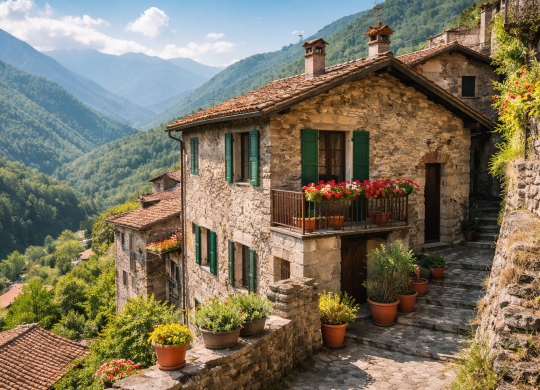
Italy has relaunched a program to sell abandoned homes for a symbolic price—just 1 euro. Mountain villages in Liguria have joined the initiative, as local authorities strive to revitalize these abandoned areas. Learn more about how the program works, what requirements must be met, and how much such housing actually costs

Buying a house in Italy for 1 euro is not a myth, but a real opportunity that is gaining popularity again in 2026. New offers have appeared in the mountain villages of Liguria, where local authorities are trying to revitalize abandoned regions. But such a purchase isn’t about cheap real estate; it’s about a commitment to invest time and money into renovation. Most houses require major repairs, and the conditions for participating in the program are quite strict. Below, we’ll look at how this initiative works and whether it’s truly worthwhile.
In the previous article, we reported on the most expensive cities in the world to live in in 2026, according to Numbeo.
Are you planning to buy real estate abroad? Before concluding a deal, it is important to consider not only the price per square meter, but also tax liabilities, restrictions for foreigners, title checks, and additional costs. Visit World's real estate lawyers will help you analyze the property, assess legal risks, and accompany you at all stages of the transaction: from the initial consultation to the signing of the contract. Get professional support and confidence in every step.

Where in Italy are houses sold for 1 euro?
The Italian “1-euro houses” program covers dozens of small towns and villages suffering from depopulation. Recently, two more mountain settlements in the Liguria region—Pignone and Triora—have joined the program. It is here that local authorities are offering neglected properties for a symbolic price to attract new residents and restore historic buildings
Pignone
Pignone is a small village located just a few kilometers from the popular tourist region of Cinque Terre. Unlike the crowded coast, this place has retained its authentic rural character: a narrow green valley, chestnut groves, stone houses, and the remains of old water mills along the Vara River
The historic center of Pignone is small and has remained virtually unchanged since medieval times—a few narrow streets radiating from the central square form a compact settlement. It is in the surrounding neighborhoods and old farm buildings where properties are now being sold for 1 euro.
Most of them are rural stone houses that were used seasonally or have been abandoned since the 1970s. Local authorities are seeking buyers willing not just to invest, but to actually bring these properties back to life and integrate into the community.
Triora
Triora is one of Italy’s most famous mountain villages, often called the “village of witches.” It is situated high in the mountains of the Argentina Valley and immediately captivates with its atmosphere: dark stone, Gothic arches, narrow passageways, and multi-level buildings create an almost theatrical landscape
This is not a tourist attraction, but a genuine historic settlement with a complex past. In the late 16th century, some of the harshest witch trials in northern Italy took place right here. Today, this history has become part of the village’s cultural identity: museums, archives, and themed walking tours operate here.
The houses offered under the program are very old, often small, with thick stone walls and a complex internal layout. The buyer is effectively acquiring not just real estate, but a piece of the historical environment that needs to be preserved and restored.
In a previous article, we mentioned that Italy provides a €15,000 grant to new residents moving to Sardinia.
How does the “1-euro houses” program work?
The “1-euro houses” program in Italy is not a sale of cheap real estate, but a tool for revitalizing neglected regions. Local authorities transfer old or abandoned buildings to new owners almost for free, but in exchange for specific commitments. The main goal is not to sell, but to bring life back to villages and preserve historic buildings.
The scheme works quite simply: the municipality compiles a list of properties that have stood unused for a long time and puts them up for sale at a symbolic price. The buyer submits an application, agrees to the terms, and takes on the responsibility of restoring the house.
Typically, the process looks like this:
1. The municipality publishes a list of available houses
2. A potential buyer submits an application and a concept for the property’s use
3. After approval, a purchase agreement is signed
4. The new owner commits to renovating the property within a specified timeframe
It is important to understand that these houses are not ready for habitation. In most cases, they are dilapidated structures without utilities, with damaged roofs or structural elements. That is why the nominal price is effectively offset by mandatory investments in renovation.
To learn more about the best countries in Europe to live and work in 2026, please follow the link.
What conditions must the buyer meet?
Despite the attractive price, participation in the program entails clear requirements. These may vary by municipality, but generally, similar rules apply throughout Italy.
Before purchasing, it is important to consider the following key conditions:
1. Mandatory building renovation – work must typically begin within 1 year and be completed within 2–3 years
2. Security deposit – the buyer pays a deposit (often between 2,000 and 5,000 euros), which is refunded upon completion of the renovation
3. Project approval – the renovation plan must be approved by local authorities, especially if the house has historical value
4. Resale restriction – in the first few years, the property cannot be sold without fulfilling the obligations
5. Actual use of the property – the owner is often expected to live in the house or use it, rather than leaving it vacant
In some cases, municipalities also give preference to applicants who plan to contribute to the local economy. For example, by opening guesthouses, workshops, or other projects.
How much does a €1 house actually cost?
Despite the catchy name, “a house for 1 euro” is just the starting price. In reality, total costs can be tens of times higher, as most properties are in a state of disrepair and require complete renovation.
Here’s what the actual cost consists of:
1. Repairs and renovation. In most cases, this is the main expense. The minimum budget usually starts at 20,000–50,000 euros, but for old stone houses in the mountains, the amount can reach 70,000–100,000 euros or more, depending on the condition of the building.
2. Security deposit. Before purchasing, you must pay a deposit (often €2,000–5,000), which is refunded upon completion of the renovation in accordance with the program’s terms.
3. Notary and legal fees. Drafting the contract, registering ownership, and translating documents—on average, this adds up to several thousand euros.
4. Taxes and fees. Even at a symbolic price, standard tax procedures apply. The amount depends on the type of transaction and the buyer’s status.
5. Utility connections. Many buildings lack modern infrastructure—electricity, water, and sewage systems. Connecting these services can significantly increase the budget.
In reality, a “1-euro house” is a project requiring complete renovation, not a ready-to-move-in home. As a result, total costs often range from 30,000 to 100,000+ euros, depending on the condition of the house and the scope of work. On the other hand, even with such investments, it can be more cost-effective than buying ready-to-move-in property in Italy, especially in tourist regions.
In our previous article, we told you where in Europe it will be the cheapest to buy real estate in 2026.
Who can buy, and does this grant the right to reside in Italy?
The “1-Euro Houses” program is open not only to Italian citizens—in most cases, foreigners can also purchase real estate. That is why the initiative is actively attracting the attention of buyers from around the world who are looking for affordable housing in Europe or an opportunity to invest in the restoration of historic properties.
However, it is important to understand right away: buying a house does not equal the right to reside. The mere fact of purchasing real estate, even after complete renovation, does not grant an automatic residence permit or any immigration privileges. This is one of the most common misconceptions among foreigners considering such programs.
To live legally in Italy, you must have a separate basis—such as employment, education, an established business, or the status of a financially independent individual. Without this, your stay is limited by the standard Schengen Zone rules—up to 90 days within a 180-day period.
In addition, the purchase process itself involves certain bureaucratic steps. The buyer must obtain an Italian tax number (codice fiscale), and sometimes open a bank account in Italy to conduct the transaction and cover subsequent renovation costs.
What to consider before buying a house in Italy?
Before applying to participate in the program, it is important to realistically assess your capabilities and expectations. First and foremost, you need to understand that this is not a ready-to-move-in home, but a property that will need to be restored practically from scratch.
It is important to calculate your budget in advance—not only for the purchase but also for all associated expenses, including renovations, paperwork, and utilities.
Equally important is the choice of location: many of these villages are situated in the mountains or remote regions where infrastructure is limited and life moves at a slow pace.
Special attention should be paid to legal nuances. Before signing the contract, it is advisable to check the condition of the property, any potential restrictions on renovation, and municipal requirements. In some cases, it is advisable to consult a local lawyer or consultant.
You should also honestly ask yourself: are you prepared to spend several years on this project? After all, this will determine whether a €1 house becomes a profitable investment or turns into a complex and costly process.
Buying a home in another country is not only an investment but also a serious legal procedure. Mistakes in documents, unaccounted taxes or restrictions for foreigners can lead to financial losses. Consultation with a real estate lawyer from Visit World will help you to safely complete the transaction, check the seller and avoid hidden risks. Contact the experts to make your real estate purchase abroad as transparent and secure as possible.
We remind you! In Europe, more and more small towns are launching support programs for new residents. Some of them offer financial grants, preferential rent or housing assistance to stop the outflow of the population. We have already talked about cities and programs that are ready to pay for relocation in 2026.
Products from Visit World for a comfortable trip:
Checklist for obtaining a visa and necessary documents in Italy;
Legal advice on immigration to Italy;
Travel insurance for foreigners in Italy;
Medical insurance all over the world.
We monitor the accuracy and relevance of our information. Therefore, if you see any error or discrepancy, please write to our hotline.
Frequantly
asked questions
Is it really possible to buy a house in Italy for 1 euro?
How much time is given for renovation?
Can you move into such a house right away?
Can foreigners participate in the program?
Is it financially viable?
Recommended articles
3 min
Expats
Where to live in Italy in 2026: top cities for relocation and work
Not all of Italy’s popular cities are ideal for a comfortable life—high prices and competition for housing often pose a problem. Instead, mid-sized cities are increasingly becoming the best choice for relocation. Learn more about the Italian cities where it will be advantageous to live and work in 2026
30 Mar. 2026
More details2 min
Travels
Starting in April 2026, Venice will once again impose a fee on tourists visiting for a single day. This year, the restrictions will remain in effect for a longer period, and the number of days subject to the fee will increase. Learn more about the new rules, dates, and the cost of visiting the city
31 Mar. 2026
More details2 min
Residence permit
Italy Offers €15,000 Grant for Moving to Sardinia: New Residents Incentive
Dreaming of living on a sunny island with clean beaches and a relaxed atmosphere? Find out about the Sardinia relocation program, a €15,000 grant and additional payments for families looking to settle in the island's small towns
01 Apr. 2026
More details3 min
Travels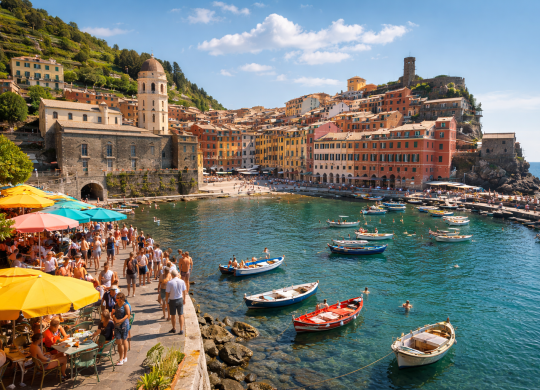
Italy is introducing new rules for tourists: key changes in 2026
Italy is gradually introducing new restrictions for tourists due to overcrowding at popular destinations. In 2026, these changes will affect Rome, Venice, Florence, Capri, and other regions. Learn more about the new rules and how they will affect travel
04 Apr. 2026
More detailsAll materials and articles are owned by VisitWorld.Today and are protected by international intellectual property regulations. When using materials, approval from VisitWorld.Today is required.