

The Oil Pipeline to Fujairah: How the UAE Is Creating an Alternative to the Strait of Hormuz
Table of contents
- War and the Strait of Hormuz blockade: what is happening in the Middle East?
- Oil prices in 2026: what’s happening in the market?
- Forecasts: Will oil prices fall?
- Why has Fujairah become a strategic port for oil exports from the UAE?
- Doubling capacity: specifications of the new pipeline
- Withdrawal from OPEC and the UAE’s New Export Strategy
- Saudi Arabia is also seeking alternative routes
- Travel Health Insurance for the UAE and the Middle East
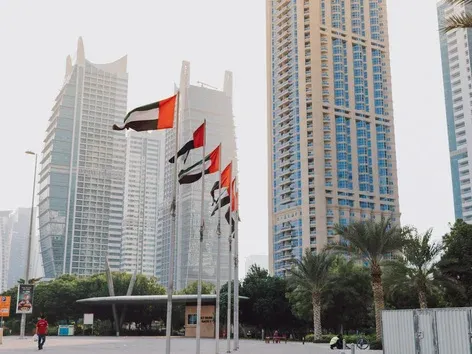
The conflict in the Middle East and the blockade of the Strait of Hormuz have transformed the global oil market and forced key producers to seek new export routes. Oil prices remain above $100 per barrel, and analysts predict a gradual decline only if shipping resumes. Learn more about how the UAE is developing alternative infrastructure through the port of Fujairah and what the market can expect in the coming months

The United Arab Emirates is expanding its export infrastructure to bypass the Strait of Hormuz—a key bottleneck in global oil trade. Amid the armed conflict between the U.S., Israel, and Iran, the strait has effectively been closed to shipping for the third month in a row, and oil prices remain above $100 per barrel.
We discuss below the role the port of Fujairah plays in the UAE’s new strategy, how the country’s exit from OPEC has altered its plans, and what price forecasts analysts are offering.
Planning a trip to the UAE or the Gulf countries amid the region’s unstable security situation?
Health insurance is a mandatory requirement for entry into most Middle Eastern countries. Purchase a policy on the Visit World portal quickly and with coverage that meets the requirements of your chosen country.

War and the Strait of Hormuz blockade: what is happening in the Middle East?
On February 28, 2026, the United States and Israel launched airstrikes on Iranian military targets. In response, Iran effectively closed the Strait of Hormuz to foreign shipping—a waterway through which about one-fifth of the world’s daily oil and gas supplies typically pass.
The Islamic Revolutionary Guard Corps (IRGC) banned ships from passing through the strait, attacked merchant vessels, and laid mines in the waterway. Commercial traffic through the Strait of Hormuz dropped by more than 90%. On April 13, the U.S., in turn, imposed a naval blockade on Iranian ports.
On April 8, with Pakistan acting as a mediator, the parties agreed to a two-week temporary ceasefire, which was later extended. As of mid-May, negotiations between Washington and Tehran are ongoing, but key issues—Iran’s nuclear program, control over the strait, and the lifting of sanctions—remain unresolved.
We previously reported that Dubai’s real estate market fell by 38% in 2026.
Oil prices in 2026: what’s happening in the market?
The blockade of the Strait of Hormuz triggered a massive price crisis in the oil market. Key indicators as of May 2026:
- Brent crude is trading in the range of $105–$111 per barrel—approximately $44–$46 higher than a year ago;
- in April, the price of Brent peaked at $138 per barrel;
- in the physical market, prices temporarily exceeded $144 per barrel, and medium distillates in Singapore set an all-time record—over $290 per barrel;
- According to IEA estimates, global oil demand will decline by 420,000 barrels per day in 2026—to 104 million barrels.
According to the U.S. Energy Information Administration (EIA), Iraq, Saudi Arabia, Kuwait, the UAE, Qatar, and Bahrain collectively halted production at 10.5 million barrels per day in April. This is the largest supply disruption in the history of the global oil market.
A selection of must-see places in Abu Dhabi — here.
Forecasts: Will oil prices fall?
Analysts at leading banks expect a gradual decline in prices, but only if shipping through the Strait of Hormuz resumes:
- EIA forecasts Brent at ~$106 per barrel in May–June, falling to ~$89 in the fourth quarter of 2026 and ~$79 in 2027;
- Morgan Stanley maintains its forecast of $110 per barrel for the second quarter of 2026 and $100 for the third, with a drop to $80 in 2027;
- J.P. Morgan expects an average Brent price of $96 per barrel for all of 2026 and $75 in 2027;
- Goldman Sachs has raised its forecast for the average annual Brent price to $85 per barrel.
All forecasts are based on the assumption that the strait will reopen around the summer of 2026. Analysts warn that even after shipping resumes, supply chains will take months, not weeks, to normalize.
Why has Fujairah become a strategic port for oil exports from the UAE?
The Port of Fujairah is located on the eastern coast of the UAE, in the Gulf of Oman—that is, outside the Strait of Hormuz. It is this geographical advantage that has made it a central element of the country’s oil export strategy.
Abu Dhabi National Oil Co. (Adnoc) already operates a pipeline from onshore fields to Fujairah with a capacity of 1.5 million barrels per day. The pipeline is 406 kilometers long. The company uses it to transport most of the Murban crude produced onshore.
It was this route that allowed the UAE to continue supplying markets after the blockade of the Strait of Hormuz. However, the existing pipeline handles less than half of the usual export volumes, so Adnoc is accelerating the construction of a second pipeline to the same port.
Visit World services for tourists, migrants, and expats: Insurance | Guides | Legal advice
Doubling capacity: specifications of the new pipeline
According to a statement from the Abu Dhabi press service, the new pipeline is scheduled to be commissioned by next year. The combined capacity of the two lines will allow the UAE to double its export capacity bypassing the strait.
Key project figures:
- current pipeline capacity to Fujairah — 1.5 million barrels per day;
- Adnoc’s planned total production capacity — 5 million barrels per day (for comparison: in 2018, the company produced about 3 million barrels);
- the combined capacity of the two pipelines is likely to exceed Murban’s oil production volume, which will open up the possibility of also transporting marine crude grades, including Upper Zakum, via Fujairah.
Upper Zakum crude is produced at fields in the Persian Gulf and is valued by refiners for its quality. This grade often influences regional pricing.
Withdrawal from OPEC and the UAE’s New Export Strategy
The UAE officially withdrew from the Organization of the Petroleum Exporting Countries (OPEC) on May 1, 2026. Without OPEC’s production quota restrictions, the country gained the ability to respond more flexibly to market needs, especially amid military disruptions to supply.
Carol Nahle, CEO of the consulting firm Crystol Energy Ltd, noted that the expansion of Fujairah’s export capacity logically complements ADNOC’s plans to increase production. According to her, the project’s strategic goal—reducing dependence on the Strait of Hormuz—existed even before the current conflict began.
According to EIA estimates, the UAE’s exit from OPEC will reduce the organization’s spare capacity to 2.5 million barrels per day in 2027—compared to the previous forecast of 3.8 million barrels.
How to get your Dubai visa deposit back — read more at the link.
Saudi Arabia is also seeking alternative routes
The UAE is not the only country in the region with an alternative route. The Saudi company Aramco uses a pipeline through Saudi Arabia to ports on the Red Sea and is working to increase their export capacity.
Both countries—the UAE and Saudi Arabia—remain the only major Gulf producers capable of supplying significant volumes of oil to the market amid the conflict. State-owned companies from both nations have been shipping cargo from the Gulf in recent weeks, bypassing the Iranian blockade.
None of the alternative routes is completely secure. During the current conflict, both the Aramco pipeline and the port of Fujairah have come under attack.
The pipeline to Fujairah itself has not yet been a direct target. However, infrastructure at both ends of the route has been damaged: Iranian drones struck a gas processing plant near the pipeline’s starting point in Khabsha, and the port of Fujairah sustained damage from numerous strikes, temporarily halting shipments.
Despite these threats, the largest producers in the Persian Gulf continue to develop alternative routes, building a more resilient
export infrastructure for the future.
Travel Health Insurance for the UAE and the Middle East
The unstable security situation in the Persian Gulf region underscores the importance of quality health insurance for anyone traveling to the UAE or neighboring countries. On the Visit World portal, you can purchase health insurance with coverage that meets the requirements of your specific destination country.
Get a medical insurance policy on Visit World—it’s convenient, fast, and affordable!
Reminder! In a previous article, we reported that AI will verify work permits in the UAE starting in May 2026.
Photo: Magnific
Products from Visit World for a comfortable trip:
Checklist for obtaining a visa and necessary documents in UAE;
Legal advice on immigration to UAE;
Travel insurance for foreigners in UAE;
Medical insurance all over the world.
We monitor the accuracy and relevance of our information, so if you notice any errors or inconsistencies, please contact our hotline.
Frequantly
asked questions
Why was the Strait of Hormuz closed in 2026?
What is the current price of Brent crude?
Recommended articles
3 min
Travels
Border Controls in the Schengen Area in 2026: Which Countries Check Documents at the Borders
In 2026, 11 European countries will temporarily reinstate border checks at the internal borders of the Schengen Area. These measures are in response to migration pressures, security threats, and major international events. Learn more about which countries have introduced border checks, where they are in effect, and how this will affect travel in Europe
19 May. 2026
More details2 min
Popular
The European Union is preparing for a large-scale transition to digital documents on smartphones. In the coming years, residents and tourists in the EU will be able to use digital IDs and driver’s licenses through a single system called the European Digital Identity Wallet. Learn more about how the new digital documents will work and what will change for travelers in Europe
20 May. 2026
More details3 min
Work
Berlin remains one of the few major cities in Germany where foreigners can find work even without knowing German. The most English-speaking job openings are offered by IT companies, startups, the fintech sector, and international delivery services. Learn more about which sectors in Berlin make it easiest to find a job without German, which companies actively hire foreigners, and where to look for current job openings
20 May. 2026
More details2 min
Work
New rules for calculating seniority are now in effect in Poland: what has changed for employees
In Poland, new rules for calculating length of service for employees of private companies took effect on May 1, 2026. Now, more periods of employment and other activities can be included in the calculation of length of service; however, employees must verify this information themselves through ZUS. Learn more about who is eligible for additional vacation days and what documents you should submit now
19 May. 2026
More detailsAll materials and articles are owned by VisitWorld.Today and are protected by international intellectual property regulations. When using materials, approval from VisitWorld.Today is required.